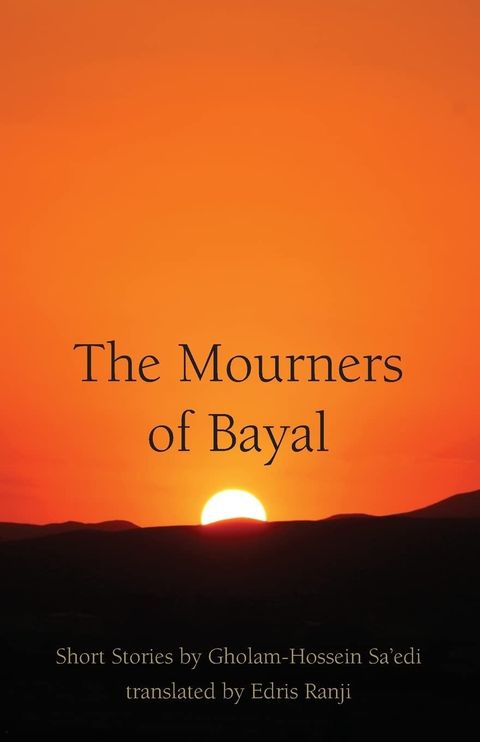
The Mourners of Bayal
SynopsisPlot
This work is a penetrating allegory of the manners, beliefs, hopes, and desperations of rural Iranians in the early seventies. The Mourners of Bayal is a very early example of magical realism. It precedes the works of masters of the genre, José Saramago, and Gabriel García Márquez. The most famous of the eight stories is the fourth (they are numbered without a title) which was adapted into a popular movie, The Cow. While away, Mashdi Hassan's cow, the center of his universe, dies. His wife is desperate and no one dares to tell him the truth. He gradually finds out, descends into madness and takes the identity of the cow. The townspeople attempt to cure him to no avail. He dies while being taken to the regional hospital.
Story
About this book
The Mourners of Bayal is a collection of eight interrelated stories by Iranian writer Gholam-Hossein Sa'edi, set in an imaginary Iranian village called Bayal. The stories are numbered rather than titled, and they follow the lives of villagers in a remote, isolated setting during the early 1970s. Sa'edi uses this small community as a lens for exploring the manners, beliefs, hopes, and quiet desperations of rural Iranian life during that period.
The collection is often cited as a very early example of magical realism, predating the internationally celebrated works of writers such as Gabriel Garcia Marquez and Jose Saramago. The fourth story is the most widely known of the eight. It was adapted into the Iranian film The Cow, which became one of the most recognized films in Iranian cinema. In that story, a villager named Mashdi Hassan leaves home, and during his absence a crisis involving his beloved cow upends the small community. The villagers struggle with how to handle the situation and its consequences for Hassan.
Sa'edi builds each story around the tensions between individual lives and collective village identity, between what people believe and what they endure. The rural setting, with its physical distance from cities and institutions, shapes how the characters respond to loss, fear, and change.