The Return of the Water Spirit

SynopsisPlot
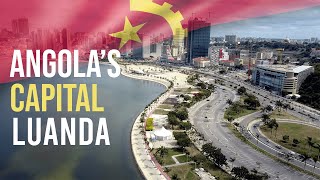
Set in Angola in the late 1980s, a time of war, and when the Marxist-orientated ruling elite became engulfed by corruption, nepotism, and rampant capitalism. Three centuries earlier, a hideous crime occurred, the beheading of a slave who had had inappropriate relations with his Master's daughter. Now, in the very same Kinaxixi Square in the city of Luanda buildings are falling down one by one baffling the country's engineers. Many describe this mysterious process as 'Luanda Syndrome, God's punishment for a degenerate society. Drawing on the essence of African mythology which had all but been obliterated by history, could this be explained by the return of a Water Spirit (the 'kianda')?
Story
About this book
The Return of the Water Spirit is set in Luanda, Angola, during the late 1980s. The country is at war, and its formerly Marxist-oriented ruling class has drifted into corruption, nepotism, and unchecked capitalism. Against this backdrop, buildings in Kinaxixi Square begin collapsing one by one, an event that baffles engineers and unsettles the city. Some residents call it Luanda Syndrome, interpreting the destruction as divine punishment for a society in moral decline.
The novel connects this present-day crisis to an act of violence three centuries earlier: the beheading of a slave in the same square, killed for a relationship with his master's daughter. Pepetela, the pen name of Angolan writer Artur Carlos Maurício Pestana dos Santos, uses this layered timeline to examine how colonial brutality echoes through generations. The mysterious collapses raise the possibility that a kianda, a water spirit from Angolan mythology, has returned. This strand of the story draws on traditions that colonialism and political upheaval had largely pushed aside.
Pepetela treats the abandonment of socialist ideals by Angola's post-independence leadership as a central subject. The fictional collapses in Kinaxixi Square serve as a concrete image for institutional decay, while the mythological layer grounds the narrative in a cultural memory older than the modern state.