The Name Of The Rose
SynopsisPlot
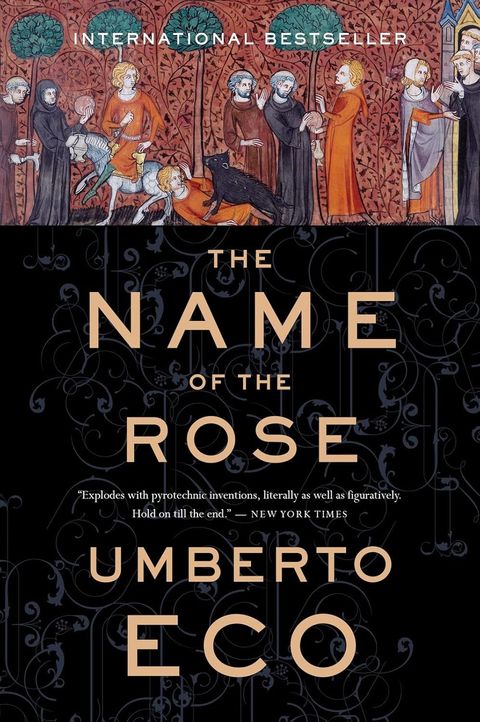
The year is 1327. Benedictines in a wealthy Italian abbey are suspected of heresy, and Brother William of Baskerville arrives to investigate. When his delicate mission is suddenly overshadowed by seven bizarre deaths, Brother William turns detective. His tools are the logic of Aristotle, the theology of Aquinas, the empirical insights of Roger Bacon — all sharpened to a glistening edge by wry humor and a ferocious curiosity. He collects evidence, deciphers secret symbols and coded manuscripts, and digs into the eerie labyrinth of the abbey, where “the most interesting things happen at night.”
Story
About this book
In the final week of November 1327, a Franciscan friar named William of Baskerville arrives at a wealthy Benedictine abbey in northern Italy. He is accompanied by his young apprentice, the novice Adso of Melk, and his official purpose is a delicate diplomatic mission connected to accusations of heresy. But within the abbey's walls, a series of strange deaths begins to unfold, seven over the course of seven days, and William's role shifts from diplomat to detective.
William's methods draw on the logic of Aristotle, the theology of Thomas Aquinas, and the experimental thinking of Roger Bacon. He deciphers coded manuscripts, interprets symbols, and navigates the abbey's labyrinthine library, a vast and deliberately confusing structure that the monks themselves are forbidden to enter freely. The killings appear tied to secrets hidden within that library, and the investigation pulls William through layers of religious dispute, political maneuvering, and centuries of accumulated knowledge.
Umberto Eco, a scholar of medieval philosophy and semiotics, published the novel in Italian in 1980. The book received the Premio Strega and the Prix Medicis Etranger. Its narrator is the elderly Adso, recounting the events of that distant week from memory long after they occurred.