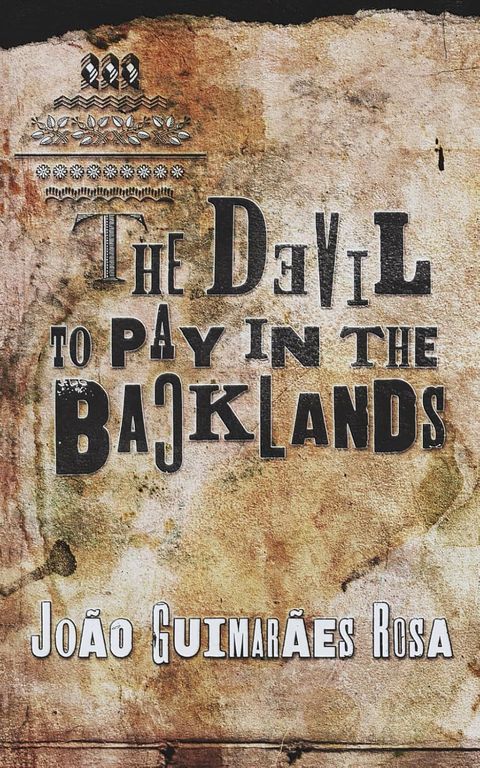
The Devil to Pay in the Backlands
SynopsisPlot
The original title refers to the veredas, which are small paths through wetlands usually located at higher altitudes characterized by the presence of grasses and buritizais, groups of the buriti palm-tree, that criss-cross the Sertão region in northern Minas Gerais as a labyrinthine net where an outsider can easily get lost, and where there is no single way to a certain place, since all paths interconnect in such a way that any road can lead anywhere. The English title refers to a later episode in the book involving an attempt to make a deal with the Devil.
Story
About this book
The Devil to Pay in the Backlands is a novel by João Guimarães Rosa, originally published in Portuguese as Grande Sertão: Veredas in 1956. It is set in the sertão, the vast dry interior of northern Minas Gerais in Brazil, a landscape crossed by veredas, narrow paths through palm-lined wetlands at higher altitudes. These paths form a web where all routes interconnect, making it easy for an outsider to become lost and impossible to follow a single fixed direction to any destination.
The story is told as a long monologue by Riobaldo, a former jagunço, or backlands gunman, who recounts his years among armed bands roaming the sertão. Central to his account is his bond with a fellow fighter named Diadorim, and the question of whether Riobaldo once attempted to strike a pact with the Devil. These two threads, loyalty and the possibility of damnation, run through the narrative as Riobaldo tries to make sense of his own past.
The original Portuguese title names the landscape itself, while the English title foregrounds the episode of the supposed diabolical bargain. The novel is widely considered one of the major works of Brazilian and Portuguese-language literature.