Inside the Hotel Rwanda
SynopsisPlot
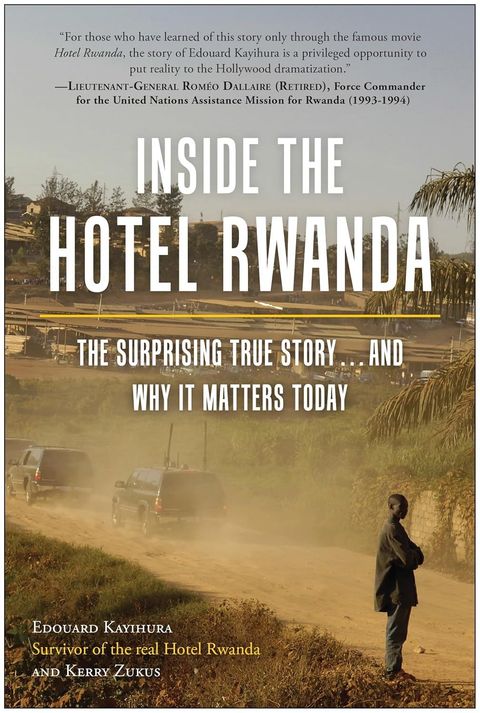
In Inside the Hotel Rwanda, survivor Edouard Kayihura tells his own personal story of what life was really like during those harrowing 100 days within the walls of that infamous hotel and offers the testimonies of others who survived there, from Hutu and Tutsi to UN peacekeepers. Kayihura tells of his life in a divided society and his journey to the place he believed would be safe from slaughter. Inside the Hotel Rwanda exposes Paul Rusesabagina as a profiteering, politically ambitious Hutu Power sympathizer who extorted money from those who sought refuge, threatening to send those who did not pay to the genocidaires, despite pleas from the hotel's corporate ownership to stop.
Story
About this book
During the 1994 genocide in Rwanda, the Hôtel des Mille Collines in Kigali sheltered more than a thousand people seeking safety. The 2004 film Hotel Rwanda presented the hotel manager, Paul Rusesabagina, as a heroic figure who protected Hutu and Tutsi civilians. Edouard Kayihura, who spent those hundred days inside the building, gives a sharply different account, written with Kerry Zukus.
Kayihura describes growing up in a society divided along ethnic lines and recounts his path to the hotel, where he expected protection. Alongside his own memoir he gathers testimony from other survivors and from UN peacekeepers. His account presents Rusesabagina as someone who profited from the crisis, demanding payment from those seeking refuge and threatening people who could not pay. It also states that the hotel's owners urged him to stop.
The result works as a survivor's record and as a political argument, since Rusesabagina later used his international fame in Rwandan opposition politics. The book raises questions about how accounts of mass violence change when commercial film shapes them, and about who decides which version of an event becomes public memory.