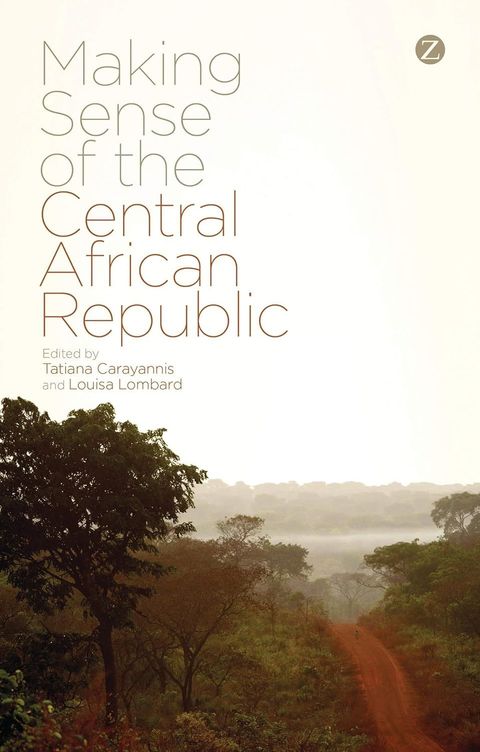
Making Sense of the Central African Republic
SynopsisPlot
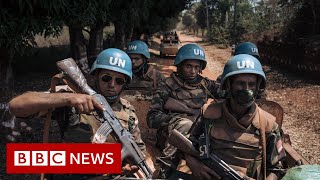
Lying at the centre of a tumultuous region, the Central African Republic and its turbulent history have often been overlooked. Democracy, in any kind of a meaningful sense, has eluded the country. Since the mid-1990s, army mutinies and serial rebellion in CAR have resulted in two major successful coups. Over the course of these upheavals, the country has become a laboratory for peacebuilding initiatives, hosting a two-decade-long succession of UN and regional peacekeeping, peacebuilding and special political missions.
Story
About this book
The Central African Republic sits at a crossroads of the continent, bordered by Chad, Sudan, South Sudan, the two Congos, and Cameroon. Despite this central position, its political history has drawn relatively little sustained scholarly attention. This edited volume, assembled by Tatiana Carayannis and Louisa Lombard with a group of contributing researchers, sets out to address that gap.
Since the mid-1990s the country has seen repeated army mutinies and armed rebellions, two of which produced successful coups. Those cycles drew sustained outside involvement, making the CAR a setting for a two-decade succession of United Nations and regional peacekeeping operations, peacebuilding programmes and special political missions. The chapters trace the internal politics behind this pattern, along with the parts played by neighbouring states and international organisations.
Alongside the editors, the listed authors include Roland Marchal, Ned Dalby, Faouzi Kilembe, Ledio Cakaj, Nathaniel Olin, Enrica Picco, Stephen W. Smith and Laurence D. Wohlers. Their chapters ask why meaningful democratic practice has not taken hold, and what the long record of intervention shows about the limits of peacebuilding in a country often left out of wider regional accounts.