Survival in the Killing Fields
SynopsisPlot
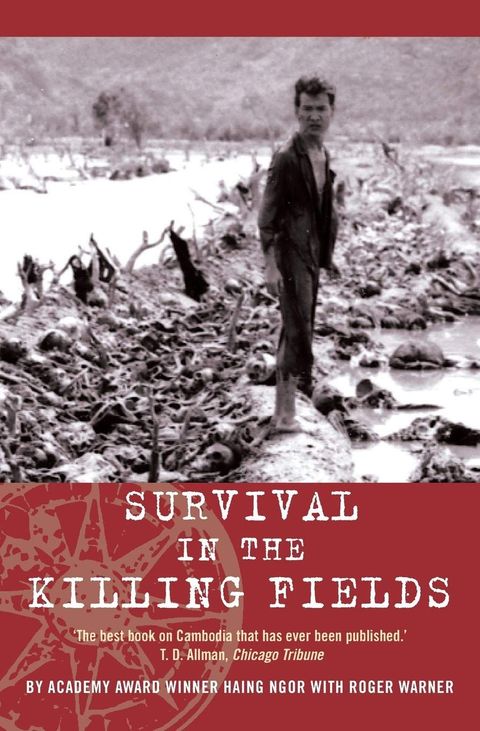
In his memoir, Survival in the Killing Fields, Haing Ngor tells the gripping and frequently terrifying story of his term in the hell created by the communist Khmer Rouge. Like Dith Pran, the Cambodian doctor and interpreter whom Ngor played in an Oscar-winning performance in The Killing Fields, Ngor lived through the atrocities that the 1984 film portrayed. Like Pran, too, Ngor was a doctor by profession, and he experienced firsthand his country's wretched descent, under the Khmer Rouge, into senseless brutality, slavery, squalor, starvation, and disease -- all of which are recounted in sometimes unimaginable horror in Ngor's poignant memoir.
Story
About this book
Haing Ngor was a doctor in Cambodia before the Khmer Rouge seized power in 1975. Under the regime led by Pol Pot, the country's cities were emptied and millions of people were forced into labor camps and rural communes. Educated professionals, including doctors, were singled out as enemies. Ngor endured forced labor, starvation, disease, and the constant threat of execution across nearly four years of Khmer Rouge rule. His memoir recounts these experiences in direct, specific detail.
After surviving the regime's collapse in 1979, Ngor eventually reached the United States as a refugee. There, with no prior acting experience, he was cast in the 1984 film The Killing Fields, portraying Dith Pran, a Cambodian doctor and interpreter whose wartime ordeal closely paralleled his own. Ngor won an Academy Award for the role. His memoir extends well beyond the scope of the film, drawing on his professional training to observe the physical and psychological conditions imposed on the Cambodian population.
The book documents the systematic dismantling of ordinary life under the Khmer Rouge, including the suppression of education, medicine, and family ties. Ngor writes as both witness and trained physician, recording what he saw with clinical precision alongside personal grief.