The Adventures of Pinocchio
SynopsisPlot
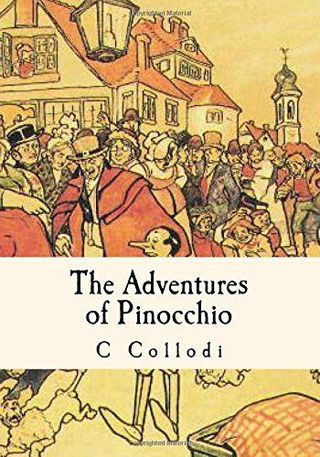
The Adventures of Pinocchio is a novel for children by Italian author Carlo Collodi, written in Pescia. A carpenter finds a talking piece of wood and gives it to his poor neighbor, Geppetto, who carves the block into a marionette and names him Pinocchio.
Story
About this book
The Adventures of Pinocchio was written by Carlo Collodi, the pen name of Carlo Lorenzini, and first published in serial form in an Italian children's newspaper starting in 1881. The story begins when a carpenter discovers a block of wood that can talk. He passes it along to his poor neighbor Geppetto, who shapes it into a marionette and names him Pinocchio. From that moment the wooden figure behaves less like a puppet and more like a willful child, running away, skipping school, and falling into one dangerous situation after another.
Collodi wrote the book in Pescia, a small town in Tuscany. The story follows Pinocchio through encounters with swindlers, magical creatures, and his own repeated poor decisions. His nose famously grows when he lies, a detail that has become one of the most recognized symbols in children's literature worldwide. Through each episode, Pinocchio confronts the gap between what he promises and what he actually does.
Carol Della Chiesa produced one of the well-known English translations of the novel. The original Italian text has been translated into hundreds of languages, and the character of Pinocchio remains closely associated with Italian storytelling tradition. A monument to the character stands in Pescia's neighboring town of Collodi, the village from which Lorenzini took his pen name.