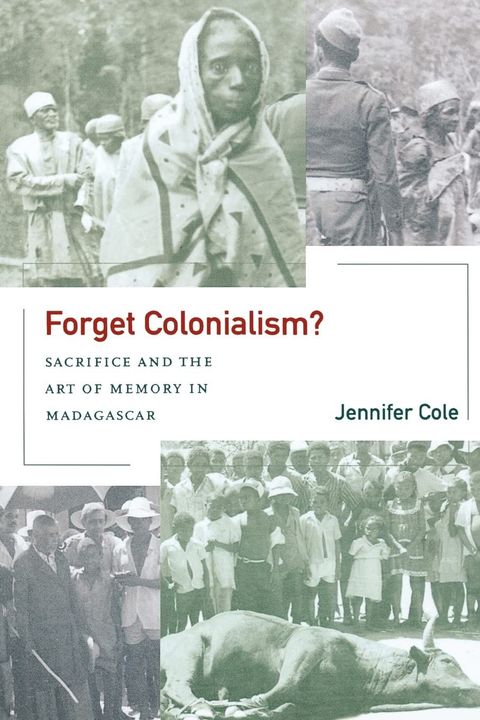
Forget Colonialism?: Sacrifice and the Art of Memory in Madagascar
SynopsisPlot
While doing fieldwork in a village in east Madagascar that had suffered both heavy settler colonialism and a bloody anticolonial rebellion, Jennifer Cole found herself confronted by a puzzle. People in the area had lived through almost a century of intrusive French colonial rule, but they appeared to have forgotten the colonial period in their daily lives. Then, during democratic elections in 1992–93, the terrifying memories came flooding back. Cole asks, How do once-colonized peoples remember the colonial period?
Story
About this book
Jennifer Cole's Forget Colonialism? examines how people in a village in eastern Madagascar remember and forget nearly a century of French colonial rule. Cole conducted fieldwork in a community that had experienced both intensive settler colonialism and a violent anticolonial rebellion, yet she found that residents appeared to set aside the colonial period in their everyday lives. The book's central puzzle is how that apparent forgetting worked in practice.
During democratic elections in 1992 and 1993, memories of colonial violence returned suddenly and forcefully across the community. Cole uses that shift to build a practice-based approach to social memory, grounded in close observation of how remembering and forgetting operate through daily routines, ritual, and sacrifice. Rather than treating memory as a fixed archive, she traces how a community shapes what is recalled and what recedes, often through ceremonial practices passed between generations.
The setting matters to the argument. East Madagascar saw heavy settlement by colonists under French rule, and the same region later carried the aftermath of armed revolt. Working outward from one place, Cole links personal recollection to wider questions about how formerly colonized populations account for the colonial past.