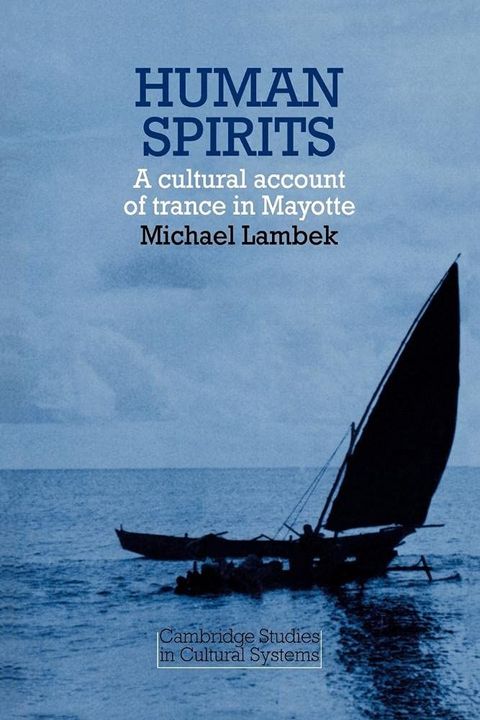
Human Spirits: A Cultural Account of Trance in Mayotte
SynopsisPlot
Professor Lambek describes how the people of Mayotte (most often women) enter into trances, during which they believe their bodies are inhabited by spirits. He then analyses the conventions for behaviour in trance and the process by which the individuals come to terms with the spirits in their midst. The book presents thorough case studies of spirit possession over time, providing one of the most detailed accounts of possession phenomena available for a single society. The author argues that trance can best be understood as a social activity within a defined system of cultural meaning rather than as a psychological problem, a simple deception or a means of manipulating others. This book should be of particular interest to those concerned with the study of ritual, symbols and non-Western religious systems.
Story
About this book
Human Spirits is an ethnographic study by Michael Lambek, based on extended fieldwork among Malagasy-speaking communities on Mayotte, a small island in the Comoros archipelago between Madagascar and the East African coast. The book documents how residents, most often women, enter trance states during which they understand their bodies to be occupied by spirits. Lambek follows individual cases over time, recording the stages through which people recognize, negotiate with, and accommodate these spirits in daily life.
Central to the study is Lambek's argument that trance should not be reduced to a psychological disorder, a conscious performance, or a tool for social manipulation. Instead, he treats possession as a structured social activity operating within a coherent system of cultural meaning. The book presents detailed case studies that track how specific individuals and their families respond to possession episodes across months and years, making it one of the more thorough longitudinal accounts of spirit possession available for a single society.
The conventions governing trance behavior receive close attention, including the recognized rules for how spirits are expected to act once they arrive and how human hosts and their communities respond. Lambek situates these practices within broader patterns of ritual and symbolic life on the island.