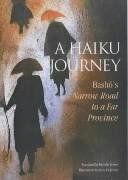
A Haiku Journey: Bashos Narrow Road to a Far Province
SynopsisPlot
In the seventeenth century, the pilgrim-poet Basho undertook on foot a difficult and perilous journey to the remote northeastern provinces of Honshu, Japan's main island. Throughout the five-month journey, the master of haiku kept a record of his impressions in a prose-poetry diary later called The Narrow Road to a Far Province. His diary was to become one of the classics of Japanese literature.
Story
About this book
In 1689, the poet Matsuo Basho set out on foot from Edo, now Tokyo, toward the remote northeastern provinces of Honshu, Japan's main island. The route took roughly five months and covered areas that were, at the time, difficult to reach and sometimes dangerous. Basho was already recognized as a master of haiku, the compact poetic form built around seasonal images and precise observation. He traveled with a single companion, visiting places tied to older poets and historical events, often sleeping in rough lodgings or temples along the way.
Basho recorded his impressions in a prose-poetry diary that mixes short stretches of travel narrative with haiku composed at specific stops. The form, known in Japanese as haibun, gives each location a double texture: a factual account of arriving somewhere, followed by a poem that fixes one moment or detail in place. The result is a work where landscape, weather, memory, and literary tradition overlap on nearly every page.
The diary, later called The Narrow Road to a Far Province, became one of the central works of Japanese classical literature. This edition presents the text in a bilingual format designed to keep Basho's language close to the translation.