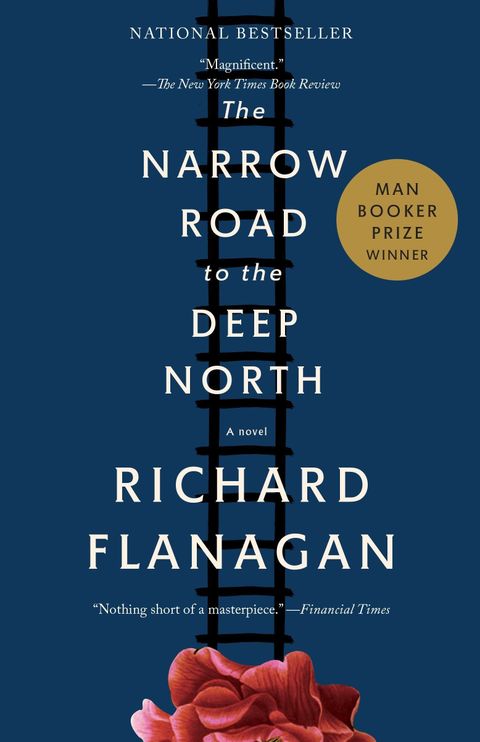
The Narrow Road to the Deep North
SynopsisPlot
Moving deftly from a Japanese POW camp to present-day Australia, from the experiences of Dorrigo Evans and his fellow prisoners to that of the Japanese guards, this savagely beautiful novel tells a story of the many forms of love and death, of war and truth, as one man comes of age, prospers, only to discover all that he has lost.
Story
About this book
Richard Flanagan's novel follows Dorrigo Evans, an Australian surgeon held in a Japanese prisoner-of-war camp during the construction of the Burma Railway in the Second World War. The story moves between the brutality of the camp, where Evans tries to keep his fellow prisoners alive under impossible conditions, and the decades of his later life in Australia. Both the captives and the Japanese guards receive sustained attention, and the novel traces how the war reshapes each of them long after it ends.
The title borrows from Matsuo Basho's seventeenth-century Japanese travel journal, a detail that threads through the book's structure and its interest in the collision between cultures forced together by violence. Flanagan sets the wartime sections along the Thailand-Burma railway line, where tens of thousands of Allied prisoners and Asian laborers died. Against this background, the novel also carries a love story that begins before the war and continues to shape Evans as he ages, rises in public standing, and contends with what the camp took from him. The book won the 2014 Man Booker Prize.