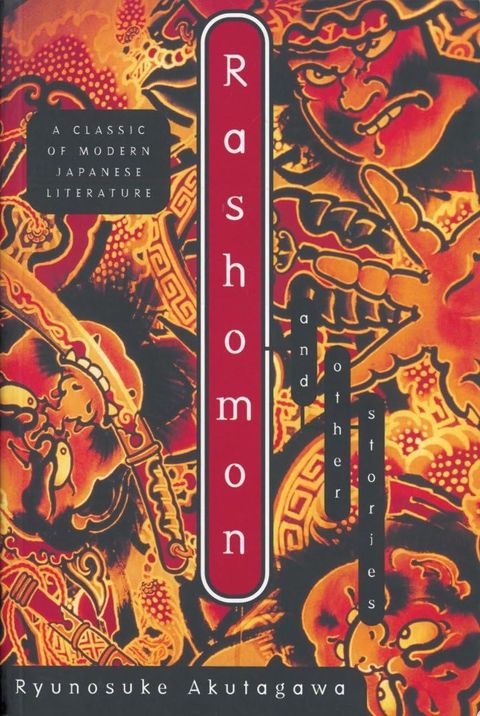
Rashomon and Other Stories
SynopsisPlot
Writing at the beginning of the twentieth century, Ryunosuke Akutagawa created disturbing stories out of Japan's cultural upheaval. Whether his fictions are set centuries past or close to the present, Akutagawa was a modernist, writing in polished, superbly nuanced prose subtly exposing human needs and flaws. "In a Grove," which was the basis for Kurosawa's classic film Rashomon, tells the chilling story of the killing of a samurai through the testimony of witnesses, including the spirit of the murdered man. The fable-like "Yam Gruel" is an account of desire and humiliation, but one in which the reader's sympathy is thoroughly unsettled. All six tales in the collection show Akutagawa as a master storyteller and an exciting voice of modern Japanese literature.
Story
About this book
Ryunosuke Akutagawa wrote in the early twentieth century, when Japan was absorbing rapid cultural change. This collection gathers six of his short stories, written in controlled, carefully weighted prose. Some are set centuries in the past and others closer to his own time, yet the attention to human need and failing stays consistently modern across all of them.
The best known piece here is In a Grove, which Akira Kurosawa used as the basis for his film Rashomon. A samurai has been killed, and a series of witnesses, among them the spirit of the dead man, give testimony that does not agree. The story sets accounts against each other rather than resolving them into one version.
Yam Gruel works more like a fable, tracing a modest man's long-standing appetite for a particular dish and the humiliation attached to it. Sympathy is offered and then complicated, so the reader is never fully settled about where to stand. Across the collection, Akutagawa keeps his stories short and turns them on small shifts of understanding rather than long explanation.