The Wretched of the Earth
SynopsisPlot
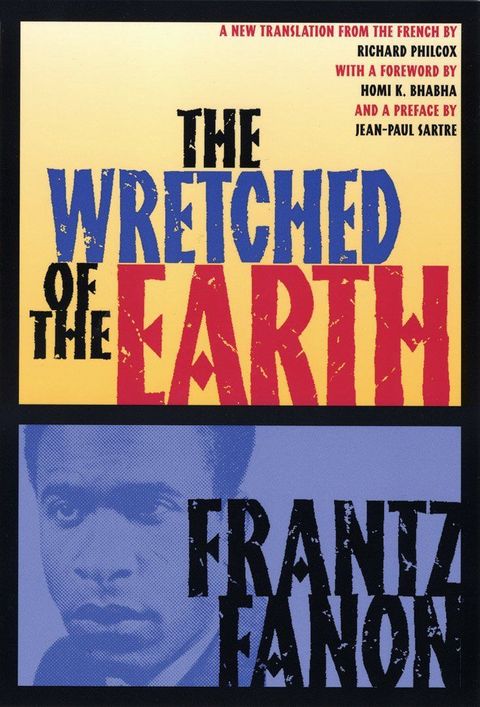
A landmark text for revolutionaries and activists, The Wretched of the Earth is an eternal touchstone for civil rights, anti-colonialism, psychiatric studies, and Black consciousness movements worldwide. Translated by Richard Philcox, featuring now-classic critical essays by Jean-Paul Sartre and Homi K. Bhabha, and a new essay, this sixtieth-anniversary edition of Fanon’s most famous text stands proudly alongside such pillars of anti-colonialism and anti-racism as Edward Said’s Orientalism and The Autobiography of Malcolm X.
Story
About this book
Frantz Fanon wrote The Wretched of the Earth while living in Tunisia during the Algerian War of Independence. First published in French in 1961, the year of his death, it examines how colonial rule shapes the psychology of colonized peoples and what paths toward liberation might look like. Fanon, a psychiatrist born in Martinique who worked in Algeria, drew on both clinical experience and political engagement to build his analysis.
The book addresses several distinct problems. It considers the role of violence in struggles against colonial power, treating the subject as a political and psychological question rather than an abstract moral one. It also turns a critical eye on what happens after independence, warning that national elites may simply replace the colonial class without changing the structures that kept ordinary people excluded. Fanon further examines how divisions along ethnic and religious lines can fracture movements that had been united during the fight for independence.
The edition carrying ISBN 978-0802141323 is an English translation by Richard Philcox and includes essays by Jean-Paul Sartre and Homi K. Bhabha. Fanon's original French title, Les Damnés de la Terre, borrows a phrase from the opening line of The Internationale.