Among The Hill Folk Of Algeria
SynopsisPlot
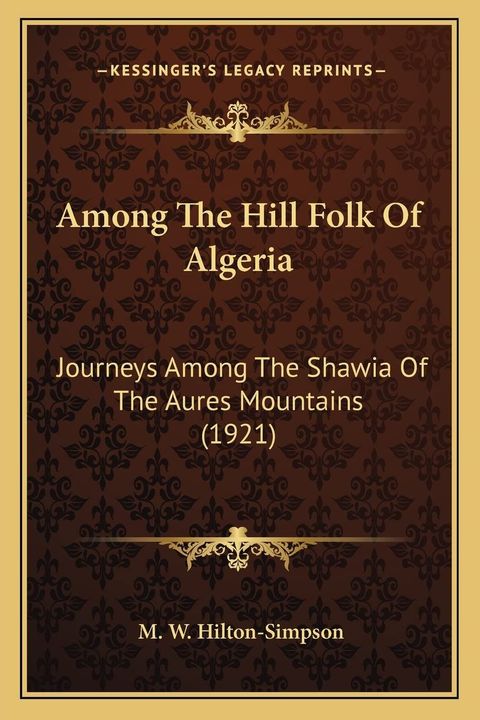
The book details the author's journeys among the Shawia people, who live in the Aures Mountains of Algeria. Hilton-Simpson's account provides a fascinating insight into the customs, traditions, and daily lives of these indigenous people, who had not yet been fully colonized by the French. The author documents his encounters with Shawia tribespeople, describing their dress, food, and unique architecture. He also explores the region's geography, flora, and fauna, providing a vivid picture of the natural environment. Throughout the book, Hilton-Simpson reflects on the challenges of cross-cultural communication and the complexities of colonialism. His writing is both informative and engaging, making ""Among The Hill Folk Of Algeria"" a valuable resource for anyone interested in North African history, anthropology, or travel writing.
Story
About this book
Among The Hill Folk Of Algeria is a travelogue by M. W. Hilton-Simpson, first published in 1921. The book records the author's time spent with the Shawia people in the Aurès Mountains of eastern Algeria. Hilton-Simpson describes their clothing, food, and building styles, as well as the landscape, plants, and wildlife of the surrounding mountain region. At the time of his visits, the Shawia had not been fully incorporated into French colonial administration, and the book captures aspects of daily life that were already under pressure from outside forces.
Hilton-Simpson pays close attention to the practical details of Shawia society. He notes how architecture and domestic routines reflected the terrain and climate of the Aurès range, a rugged area of peaks and gorges in what is now northeastern Algeria. The book also touches on the difficulties of communication between the author and the communities he encountered, and on the broader tensions surrounding French colonial presence in the region.
The Aurès Mountains later became significant during the Algerian War of Independence in the 1950s. Hilton-Simpson's account, written decades earlier, offers a ground-level record of a period before many of those changes took shape. The book sits at the intersection of travel writing, early ethnography, and colonial-era observation.