Eastern Armenian For English Speakers
SynopsisPlot
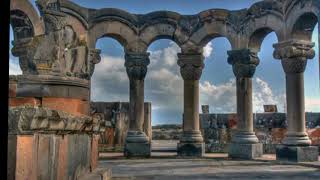
It is particularly good for beginners, since it also educates the learners culturally. I have written this textbook with the challenges of my students in mind and by utilizing most efficient methodologies of teaching foreign languages. The textbook consists of two parts. Part 1 is for complete beginners, where the alphabet, basic dialogues accompanied by Latin transliteration, grammar and essential vocabulary are taught. Part 2, on the other hand, is intended for intermediate learners. We have almost no transliteration in this section and assume that the student is feeling more comfortable reading the Armenian letters. The units in Part 2 have more exercises, longer texts and teach richer vocabulary. The texts and dialogues include information about Armenian places of interest, famous writers and artists, historical facts, pictures. This way the student feels more engaged with the Armenian culture and does not simply learn a new foreign language. In the appendix, I included a more elaborate vocabulary list, common Armenian proverbs, acronyms and useful expressions. I hope you enjoy your Armenian journey!
Story
About this book
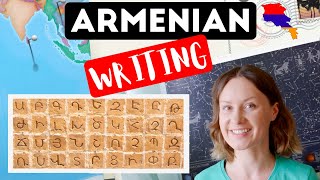
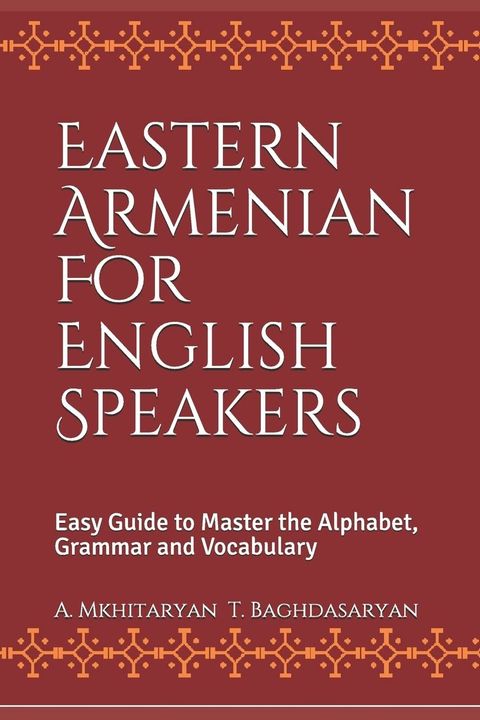
Eastern Armenian For English Speakers is a language textbook by A. Mkhitaryan and T. Baghdasaryan, designed to take learners from the Armenian alphabet through to intermediate reading and conversation. The book is split into two parts. Part 1 covers the basics: the alphabet, introductory dialogues, core grammar, and essential vocabulary. Latin transliteration accompanies the Armenian script throughout this section, giving beginners a way to sound out words before they can read the letters fluently.
Part 2 is aimed at intermediate learners and drops most of the transliteration, expecting students to read Armenian script with growing confidence. The units here contain longer texts, additional exercises, and a wider range of vocabulary. Both sections include cultural material such as information about Armenian places of interest, notable writers and artists, and historical background, so that language study runs alongside a broader introduction to the country.
An appendix at the back provides an expanded vocabulary list, a collection of common Armenian proverbs, acronyms, and everyday expressions. Eastern Armenian is the standard variety spoken in the Republic of Armenia and by many diaspora communities, distinct from the Western Armenian branch that developed in the Ottoman Empire.