Armenian Mythology
SynopsisPlot
According to De Morgan there are signs which indicate that the Armenians were initially nature worshipers and that this faith in time was transformed to the worship of national gods, of which many were the equivalents of the gods in the Roman, Greek and Persian cultures. Georg Brandes described the Armenian gods in his book: "When Armenia accepted Christianity, it was not only the temples which were destroyed, but also the songs and poems about the old gods and heroes that the people sang. We have only rare segments of these songs and poems, segments which bear witness of a great spiritual wealth and the power of creation of this people and these alone are sufficient reason enough for recreating the temples of the old Armenian gods. These gods were neither the Asian heavenly demons nor the precious and the delicate Greek gods, but something that reflected the characteristics of the Armenian people which they have been polishing through the ages, namely ambitious, wise and good - hearted."
Story
About this book
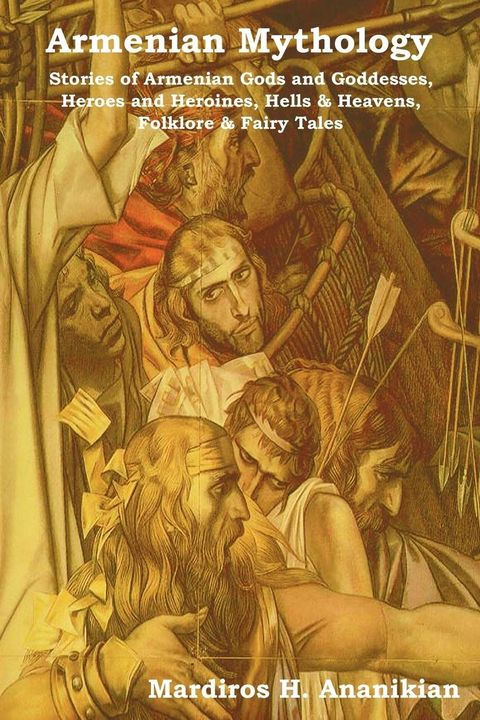
Armenian Mythology by Mardiros H. Ananikian surveys the religious beliefs and divine figures of pre-Christian Armenia. The book traces how early nature worship gradually shifted toward a structured pantheon of national gods. Several of these deities had clear parallels in Persian, Greek, and Roman traditions. Aramazd, Mihr, and Anahit show strong connections to Zoroastrian religion, while figures like Barsamin reflect Assyrian influence.
Alongside these borrowed or adapted gods, the record preserves traces of figures that appear to be native Armenian creations. Hayk, a legendary ancestor and archer, and Vahagn, a god associated with fire and courage, belong to this older layer, as does Astghik, linked to love and water. Much of the original poetry and song connected to these figures was lost after Armenia adopted Christianity in the early fourth century. Temples were dismantled, and oral traditions about the old gods largely disappeared.
What survives are fragments, quoted and discussed by later scholars. Ananikian draws on sources such as De Morgan and Georg Brandes to reconstruct what can still be known. The book sits at the intersection of comparative religion and regional history, assembling scattered evidence from a period that left few written records of its own.