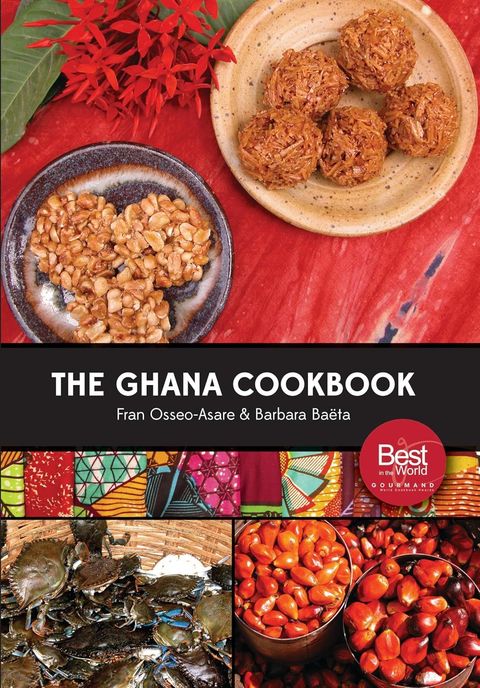
The Ghana Cookbook
SynopsisPlot
The Akan proverb “The good soup comes from the good earth” elegantly sums up Ghana’s tradition of cooking with seasonal, local ingredients. With an emphasis on locally caught fish and seafood, vegetables, fruits and legumes, Ghana’s cuisine is vibrant, healthful, and eminently appealing. Limited access to wheat and dairy results in a variety of gluten-free, lactose-free, and vegan options using starches such as plantains, cassava, taro, sweet potatoes and millet, and creamy nut-based soups and sauces. In over 140 recipes that represent all regions of Ghana, the authors highlight flavor principles, seasoning techniques, and basic stocks, with later chapters dedicated to snacks, soups and stews, protein entrees, beverages, baked goods, and much more.
Story
About this book
The Ghana Cookbook, written by Fran Osseo-Asare and Barbara Baëta, collects over 140 recipes drawn from all regions of Ghana. The book opens with an Akan proverb that connects good cooking to the land itself, and this idea of seasonal, locally sourced ingredients runs through the entire collection. Chapters are organized around flavor principles, seasoning techniques, and foundational stocks before moving into specific categories such as snacks, soups, stews, protein dishes, beverages, and baked goods.
Ghanaian cooking relies heavily on starches like plantain, cassava, taro, sweet potato, and millet rather than wheat or dairy. This means many of the recipes are naturally gluten-free, lactose-free, or vegan without requiring substitutions. Nut-based soups and sauces provide richness in place of cream or butter. Fish and seafood, much of it locally caught, appear frequently alongside vegetables, fruits, and legumes.
The book received the Gourmand Cookbook Award for Best African Cuisine Cookbook. Baëta is a Ghanaian cooking teacher, and Osseo-Asare is a food writer and researcher who has studied West African foodways for decades. Together they present a working reference organized around the practical structure of Ghanaian meals rather than a single regional tradition.