Kwéyòl / Creole: Recipes
SynopsisPlot
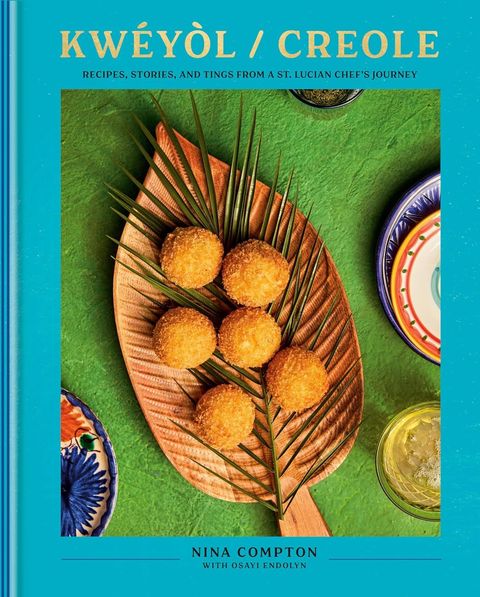
Growing up in St. Lucia, a small island in the Eastern Caribbean, chef Nina Compton developed a strong sense of community through cooking and food. As she traveled and worked in restaurants abroad, she was eager to learn, improvise, and innovate by doing what transplants like herself do best: Bring the best of home with them wherever they go. Kwéyòl / Creole explores the cuisines and pivotal locales that form the basis of Nina’s unique culinary perspective: from her birthplace in St. Lucia, to Jamaica where her view of Caribbean cuisines broadened, to Miami where she was immersed in Afro-Latin influences and continued to hone her cooking style, and finally New Orleans, her adopted city whose Creole cuisine brought her home in new ways.
Story
About this book
Nina Compton grew up on Saint Lucia, a small island in the Eastern Caribbean, where cooking was closely tied to community life. She trained and worked in restaurants across several countries, carrying the flavors of her childhood with her as she moved. This cookbook traces the places that shaped her approach to food: Saint Lucia itself, Jamaica, Miami, and New Orleans, the city she eventually made her home.
Each location introduced distinct ingredients, techniques, and traditions. In Jamaica, Compton encountered a wider range of Caribbean cooking styles. Miami brought Afro-Latin influences into her kitchen. New Orleans, with its own longstanding Creole food culture, offered unexpected points of overlap with the Caribbean dishes she had grown up eating. The book's title reflects that connection, pairing the Saint Lucian Kwéyòl language with the word Creole, two terms rooted in histories of contact, adaptation, and local reinvention.
The recipes collected here follow that arc, moving between regions and drawing on what Compton absorbed in each place. Rather than presenting a single national cuisine, the book maps a personal cooking geography shaped by migration, professional kitchens, and the ongoing pull of home cooking.