Search Sweet Country
SynopsisPlot
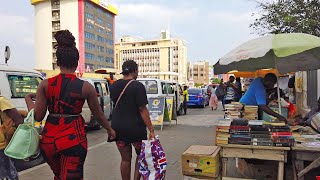
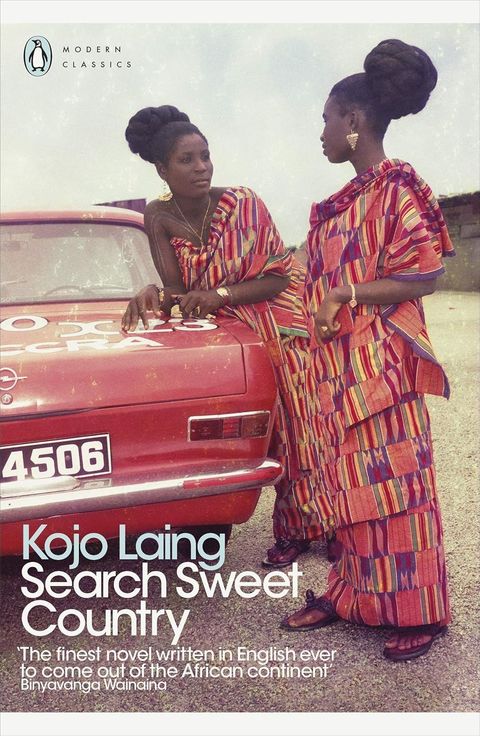
Search Sweet Country follows the lives of an eclectic, interconnected group of Ghanaians living in and around the sprawling, chaotic city of Accra in the mid-1970s. Bringing the city to life in dizzying, lyrical prose, Laing weaves a story filled with bizarre and often melancholy characters: an idealistic professor, a lovely young witch, a wide-eyed student, a corrupt politician and his hack sidekick, a business-savvy young woman, a healer, a bishop and a crazy man intent on founding his own village. Their collective narratives create a portrait of a country where colonialism is dying, but democracy remains elusive. Search Sweet Country is a timeless, near-forgotten gem by a virtuosic writer, as necessary now as when the book was first published. Like Joyce's Dublin and Dickens's London, Laing's Accra brims with both lush specificity and universal relevance.
Story
About this book
Search Sweet Country is set in Accra, Ghana, during the mid-1970s, a period when the country was navigating its post-colonial identity. Kojo Laing populates the novel with a wide cast of characters whose lives overlap across the city: a professor with idealistic aims, a young woman described as a witch, a student still new to the world, a corrupt politician paired with a loyal subordinate, a healer, a bishop, and a man determined to establish his own village. Their stories intersect and accumulate into a composite portrait of Accra as a place of restless energy and uncertainty.
Laing's prose style is dense and lyrical, building the city through layered, sometimes disorienting language. Accra in the novel is sprawling and chaotic, full of competing voices and impulses. The characters range from the ambitious to the eccentric, and many carry a strain of melancholy beneath their surface activity. The novel traces political tensions between the lingering effects of colonial rule and the difficulty of building democratic institutions.
The book received the Valco Fund Literary Award for Fiction and the Ghana Book Award. Laing, a Ghanaian writer, spent much of his life in Accra, and the novel reflects a close familiarity with the city's geography and social layers.