Saturday Is for Funerals
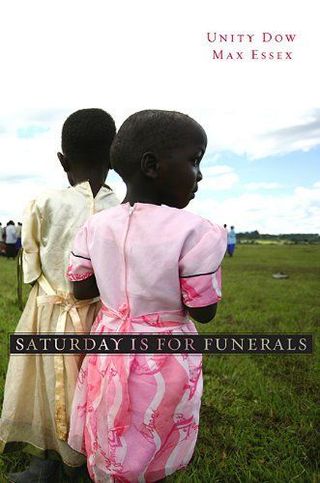
SynopsisPlot
In the year 2000 the World Health Organization estimated that 85 percent of fifteen-year-olds in Botswana would eventually die of AIDS. In Saturday Is for Funerals we learn why that won't happen. Unity Dow and Max Essex tell the true story of lives ravaged by AIDS—of orphans, bereaved parents, and widows; of families who devote most Saturdays to the burial of relatives and friends. We witness the actions of community leaders, medical professionals, research scientists, and educators of all types to see how an unprecedented epidemic of death and destruction is being stopped in its tracks. This book describes how a country responded in a time of crisis.
Story
About this book
In the year 2000, the World Health Organization estimated that 85 percent of fifteen-year-olds in Botswana would eventually die of AIDS. Saturday Is for Funerals, written by Unity Dow and Max Essex, documents how the country confronted that projection. Dow, a Botswanan judge and human rights lawyer, and Essex, a Harvard researcher specializing in AIDS, bring distinct but overlapping perspectives to the crisis. The title refers to a pattern that became routine for many families: weekends structured around burying relatives and friends.
The book presents individual accounts of orphans, bereaved parents, and widows alongside the organized responses of medical workers, community leaders, scientists, and educators. Rather than offering a single narrative arc, Dow and Essex move between personal stories and public health efforts to show what happened at different levels of Botswanan society. The scale of loss is conveyed through specific lives rather than statistics alone.
Botswana is a sparsely populated country, smaller in population than many single cities, which made both the spread of the epidemic and the coordinated response unusually visible. The book traces how government programs, antiretroviral treatment access, and community action began to alter the course of the crisis within a relatively short period.