Of Blood and Fire
SynopsisPlot
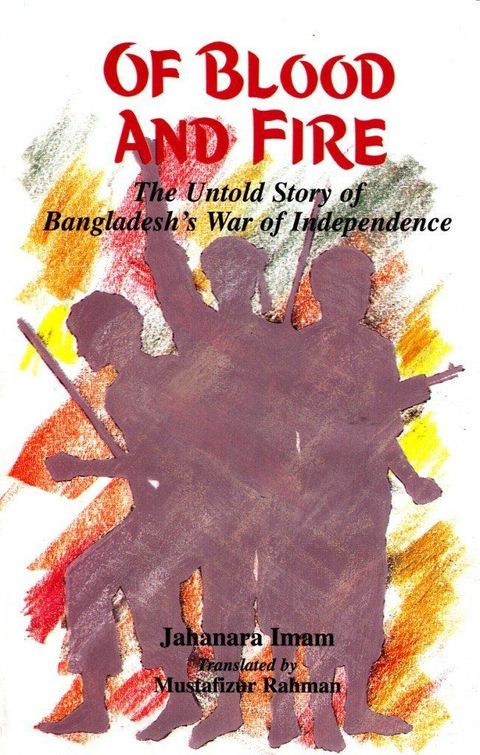
The year 1971 saw the eastern half of Pakistan (now Bangladesh) rise in revolt against the military regime of the country which had unleashed a reign of terror to crush the people's demand for independence. There were indiscriminate killing, burning, and looting of unarmed civilians. An underground resistance movement spearheaded by students came into being to fight the oppressor. A full-fledged war of liberation ensued. The breathtaking events of 1971 are faithfully recorded in the present volume. It is a first-hand account of the author who along with her son and husband took an active part in the struggle for freedom. She had herself witnessed some of the events. For the rest, she gathered facts from authentic sources. Written in the form of a diary, -the book was originally published in Bengali.
Story
About this book
Of Blood and Fire is a diary-form account of the 1971 war of independence in what was then East Pakistan, now Bangladesh. The author, Mustafizur Rahman, recorded events during the months when a military crackdown targeted civilians across the region, prompting an armed resistance movement led in part by students and ordinary citizens. Rahman, along with her husband and son, took part in the struggle, and the book draws on both her direct observations and material gathered from other sources she considered reliable.
Originally written and published in Bengali, this English edition aims to bring the account to readers beyond Bangladesh. The diary structure follows events as they unfolded rather than reshaping them into a conventional narrative. Mass killings, arson, and looting of unarmed people form the backdrop, while the foreground traces the emergence of organized resistance and the course of the liberation war. Because Rahman was present during some of the episodes she describes, portions of the book carry the specific detail of eyewitness testimony.
The volume sits within a body of personal literature from 1971 that documents the conflict from inside occupied territory. Its scope covers both public events and the daily pressures faced by families caught up in the fighting.