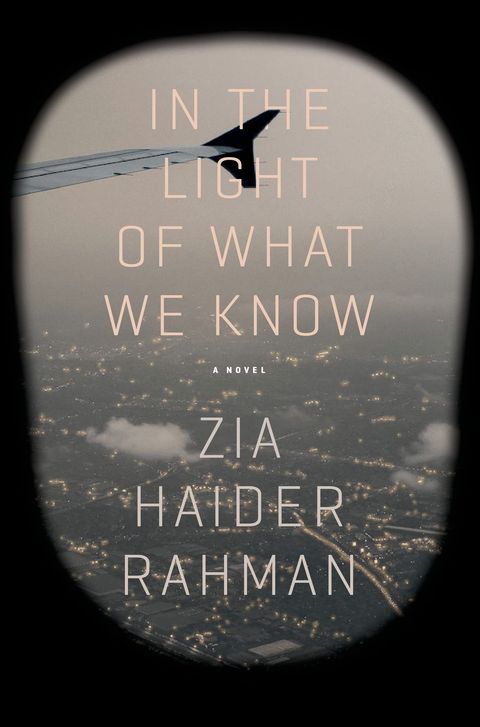
In the Light of What We Know
SynopsisPlot
One September morning in 2008, an investment banker approaching forty, his career in collapse and his marriage unraveling, receives a surprise visitor at his West London townhouse. In the disheveled figure of a South Asian male carrying a backpack, the banker recognizes a long-lost friend, a mathematics prodigy who disappeared years earlier under mysterious circumstances. The friend has resurfaced to make a confession of unsettling power. In the Light of What We Know takes us on a journey of exhilarating scope--from Kabul to London, New York, Islamabad, Oxford, and Princeton--and explores the great questions of love, belonging, science, and war. It is an age-old story: the friendship of two men and the betrayal of one by the other. The visitor, a man desperate to climb clear of his wrong beginnings, seeks atonement; and the narrator sets out to tell his friend's story but finds himself at the limits of what he can know about the world--and, ultimately, himself.
Story
About this book
In September 2008, an investment banker in West London opens his door to find a figure he has not seen in years: a former college friend, a gifted mathematician, standing on his doorstep with a backpack and no clear explanation for where he has been. The banker's own life is fracturing, his career faltering amid the financial crisis and his marriage coming apart. The returning friend carries a confession, and the two men begin circling each other's pasts in conversations that stretch across months and continents.
The novel moves between Kabul, London, New York, Islamabad, Oxford, Princeton, and Sylhet, following two lives shaped by class, culture, and migration. One man comes from privilege; the other has spent years trying to escape the constraints of his origins. Their friendship, built during university, is tested by questions of loyalty, ambition, and belonging. Zia Haider Rahman threads mathematics, finance, and the politics of the Afghan war through a story that is essentially about two people trying to understand what they owe each other.
The narrator sets out to reconstruct his friend's story but gradually confronts the limits of his own knowledge. The book is structured around layered recollections and digressions, giving it the texture of a long, unfinished conversation rather than a straightforward plot.