Father Elijah: An Apocalypse
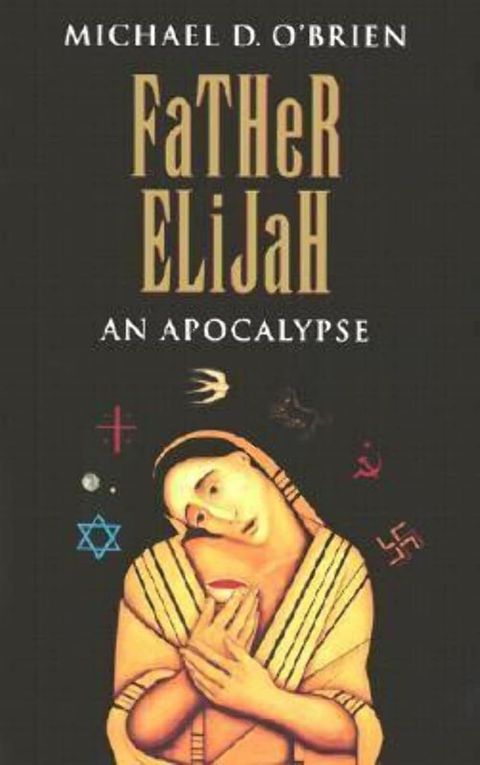
SynopsisPlot
Father Elijah is a convert from Judaism, a survivor of the Holocaust, a man once powerful in Israel. For twenty years he has been "buried in the dark night of Carmel" on the mountain of the prophet Elijah. The Pope and the Cardinal Secretary of State call him out of obscurity and give him a task of the highest sensitivity: to penetrate into the inner circles of a man whom they believe may be the Antichrist. Their purpose: to call the Man of Sin to repentance, and thus to postpone the great tribulation long enough to preach the Gospel to the whole world. In this richly textured tale, Father Elijah crosses Europe and the Middle East, moves through the echelons of world power, meets saints and sinners, presidents, judges, mystics, embattled Catholic journalists, faithful priests and a conspiracy of traitors within the very House of God. This is an apocalypse in the old literary sense, but one that was written in the light of Christian revelation.
Story
About this book
Father Elijah is a novel set within the Roman Catholic Church during a period of global crisis. Its central character is a Jewish convert to Catholicism who survived the Holocaust and once held influence in Israel. For two decades he has lived in seclusion as a Carmelite monk on Mount Carmel, the biblical mountain associated with the prophet Elijah. His quiet life ends when the Pope and the Cardinal Secretary of State summon him for a sensitive mission: to make contact with a powerful political figure they suspect may be the Antichrist, and to call that figure to repentance.
The mission takes Father Elijah across Europe and the Middle East, where he moves through layers of political and ecclesiastical power. Along the way he encounters priests, journalists, mystics, judges, and heads of state, as well as figures inside the Church whose loyalties are uncertain. The novel follows the structure of an apocalypse in the older literary sense, a narrative concerned with hidden realities being uncovered rather than simple destruction.
Michael D. O'Brien frames the story around questions of faith under pressure, institutional loyalty, and the tension between spiritual obedience and personal judgment. The plot draws on Catholic eschatology, the branch of theology concerned with the end times, and places its fictional events within recognizable modern settings and institutions.