Basilica: The Splendor and the Scandal: Building St. Peter's
SynopsisPlot
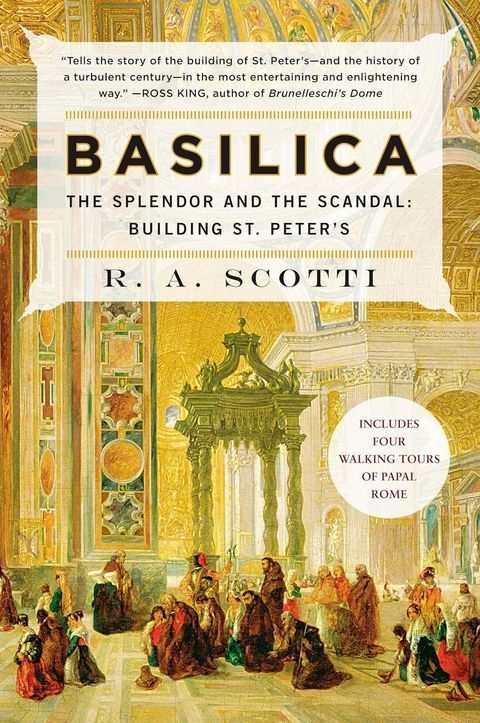
In this dramatic journey through religious and artistic history, R. A. Scotti traces the defining event of a glorious epoch: the building of St. Peter's Basilica. Begun by the ferociously ambitious Pope Julius II in 1506, the endeavor would span two tumultuous centuries, challenge the greatest Renaissance masters—Michelangelo, Raphael, and Bramante—and enrage Martin Luther. By the time it was completed, Shakespeare had written all of his plays, the Mayflower had reached Plymouth—and Rome had risen with its astounding basilica to become Europe's holy metropolis.
Story
About this book
R. A. Scotti's Basilica follows the construction of St. Peter's Basilica in Rome, a project that began in 1506 under Pope Julius II and took roughly two centuries to complete. The book covers the succession of architects, popes, and political forces that shaped the building over that long span. Among the figures involved were Bramante, who drafted the original centralized plan, Raphael, who succeeded him, and Michelangelo, who redesigned the dome late in his life. Each brought a different architectural vision, and the project changed direction repeatedly as leadership shifted.
Scotti also traces the wider consequences of the construction. Funding the basilica required enormous sums, and the sale of indulgences to raise money became one of the grievances that fueled Martin Luther's break with the Catholic Church. The building's timeline overlapped with the Protestant Reformation, the late Renaissance, and the early colonial era. Scotti uses these parallels to give a sense of scale: by the time the basilica was finished, Shakespeare's plays had already been written and English settlers had crossed the Atlantic.
The book is set largely in Vatican City and Rome, drawing on the politics of the papal court, the rivalries among artists and architects, and the physical challenges of constructing the largest church in Christendom at that time.