She Would Be King
SynopsisPlot
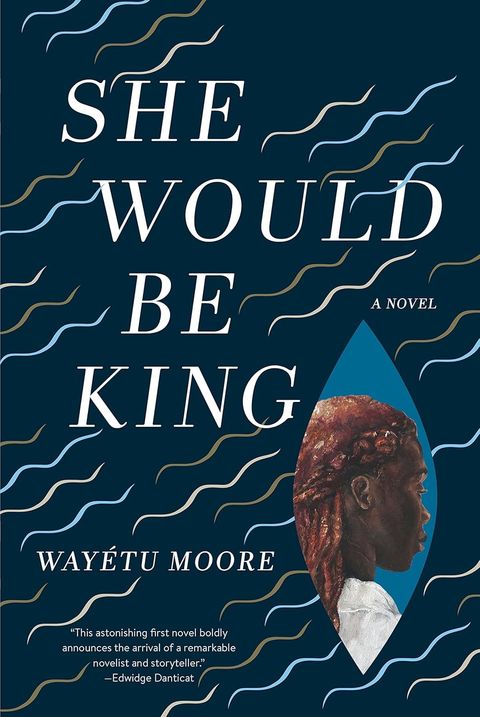
Gbessa, exiled from the West African village of Lai, is starved, bitten by a viper, and left for dead, but still she survives. June Dey, raised on a plantation in Virginia, hides his unusual strength until a confrontation with the overseer forces him to flee. Norman Aragon, the child of a white British colonizer and a Maroon slave from Jamaica, can fade from sight when the earth calls him. When the three meet in the settlement of Monrovia, their gifts help them salvage the tense relationship between the African American settlers and the indigenous tribes, as a new nation forms around them. Moore’s intermingling of history and magical realism finds voice not just in these three characters but also in the fleeting spirit of the wind, who embodies an ancient wisdom. “If she was not a woman,” the wind says of Gbessa, “she would be king.” In this vibrant story of the African diaspora, Moore, a talented storyteller and a daring writer, illuminates with radiant and exacting prose the tumultuous roots of a country inextricably bound to the United States.
Story
About this book
She Would Be King follows three characters whose lives converge in Monrovia during the early formation of Liberia. Gbessa is cast out from the village of Lai in West Africa, subjected to starvation and snakebite, yet she does not die. June Dey grows up enslaved on a Virginia plantation, concealing extraordinary physical strength until a violent encounter with his overseer leaves him no choice but to escape. Norman Aragon, born in Jamaica to a British colonizer and a Maroon woman held in slavery, possesses the ability to vanish from sight.
The three arrive separately in the coastal settlement that would become the capital of a new country. Liberia's founding involved deep friction between the formerly enslaved African Americans who arrived as settlers and the indigenous communities already living on the land. Moore sets her characters at this fault line, using elements of magical realism to explore the strains of building a nation from such different histories.
A narrating wind moves through the story, carrying an older perspective that predates the settlement. The novel draws on the real geography and early history of Liberia while granting its central figures abilities that place them somewhere between folklore and fiction.