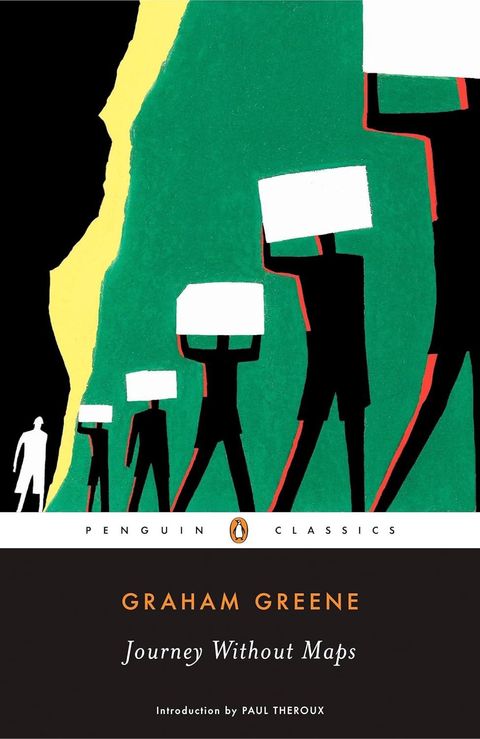
Journey Without Maps
SynopsisPlot
Now with a new introduction by Paul Theroux, Journey Without Maps is the spellbinding record of Greene's journey. Crossing the red-clay terrain from Sierra Leone to the coast of Grand Bassa with a chain of porters, he came to know one of the few areas of Africa untouched by colonization. Western civilization had not yet impinged on either the human psyche or the social structure, and neither poverty, disease, nor hunger seemed able to quell the native spirit.
Story
About this book
In 1935, Graham Greene traveled on foot from Sierra Leone into the interior of Liberia, a West African republic established in the nineteenth century as a settlement for formerly enslaved people from the Americas. The route took him across red-clay landscapes to the coast of Grand Bassa, accompanied by a line of porters. At the time, much of the Liberian interior was poorly mapped by outside powers, and Greene found communities whose daily patterns had developed largely apart from European colonial administration.
Greene's account records what he observed along the way: local social structures, the physical demands of the trek, encounters with illness, and the routines of village life. The title reflects both the literal absence of reliable maps for the region and a broader sense of entering unfamiliar territory, psychological as well as geographic. Greene was still in the earlier part of his writing career, and the book sits among a small number of travel works he produced alongside his novels.
A later edition of the book includes an introduction by Paul Theroux. The narrative is set firmly in a particular moment in Liberian and West African history, before many of the political changes that would reshape the region over the following decades.