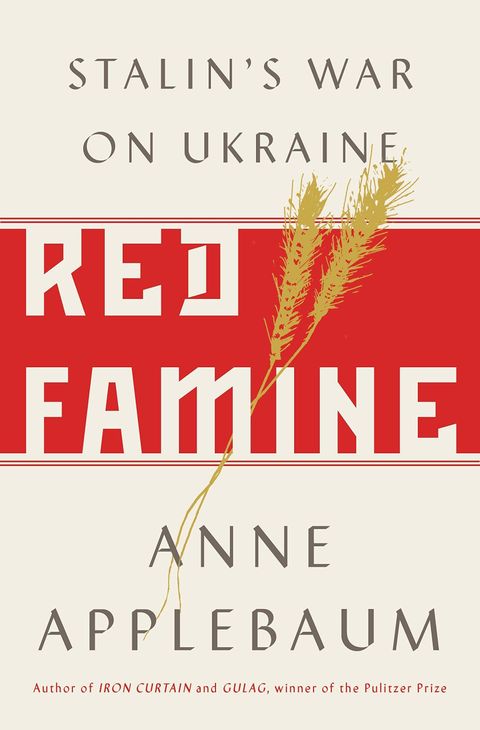
Red Famine: Stalin's War on Ukraine
SynopsisPlot
In 1929 Stalin launched his policy of agricultural collectivization—in effect a second Russian revolution—which forced millions of peasants off their land and onto collective farms. The result was a catastrophic famine, the most lethal in European history. At least five million people died between 1931 and 1933 in the USSR. But instead of sending relief, the Soviet state made use of the catastrophe to rid itself of a political problem.
Story
About this book
In 1929, Joseph Stalin imposed agricultural collectivization across the Soviet Union, forcing millions of peasants from their land and into state-run collective farms. The policy triggered widespread crop failure and starvation. Between 1931 and 1933, at least five million people died of famine across the USSR, making it the most lethal famine recorded in European history. Anne Applebaum's Red Famine examines this period with a specific focus on Ukraine, where the death toll was concentrated and where the famine carried a particular political dimension.
Applebaum argues that more than three million Ukrainians who died in this period were not incidental victims of poor planning. She presents evidence that the Soviet state used the famine as a tool to suppress Ukrainian national identity and political resistance. Rather than directing relief to starving regions, authorities tightened grain requisitions and restricted movement out of affected areas. The book traces how Soviet leadership turned an agricultural disaster into a deliberate instrument of control.
The study draws on Ukrainian and Russian archival sources, many of which became accessible only after the end of the Soviet Union. Applebaum reconstructs events at multiple levels, from decisions made in Moscow to the experiences of individual villages and families across the Ukrainian countryside.