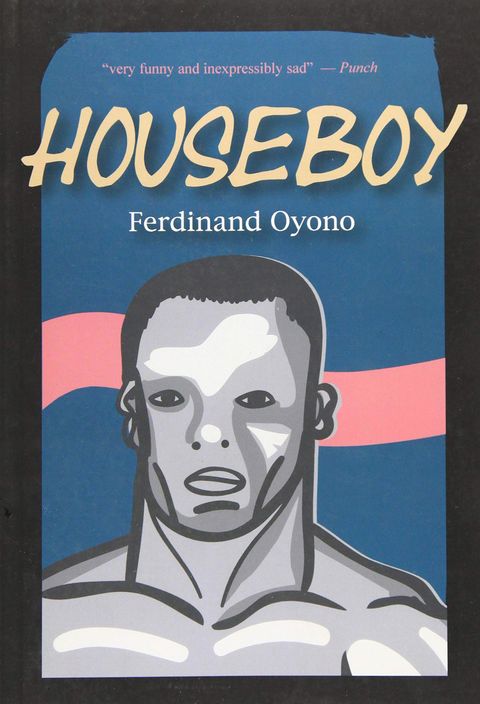
Houseboy
SynopsisPlot
Toundi Ondoua, the rural African protagonist of Houseboy, encounters a world of prisms that cast beautiful but unobtainable glimmers, especially for black youth in colonial Cameroon. Houseboy, written in the form of Toundi's captivating diary and translated from the original French, discloses his awe of the white world and a web of unpredictable experiences. Early on, he escapes his father's angry blows by seeking asylum with his benefactor, the local European priest who meets an untimely death. Toundi then becomes "the Chief European's 'boy'--the dog of the King." Toundi's attempt to fulfill a dream of advancement and improvement opens his eyes to troubling realities.
Story
About this book
Houseboy is a novel by Cameroonian writer Ferdinand Oyono, written in French and presented as the diary of a young man named Toundi Ondoua. Set in colonial Cameroon, it follows Toundi from his rural village, where he escapes his father's beatings by taking refuge with a European priest. That shelter ends when the priest dies. Toundi then enters domestic service with the chief European administrator.
Through his diary entries, Toundi records what he sees inside the European household. He observes the officials and their families at close range, and his early awe of the white world slowly shifts into a harder understanding. The form keeps the story in small concrete details of daily work rather than broad statements, and the distance between Toundi's hopes and what the colonial order allows becomes the book's central tension.
Oyono published the novel in 1956, during the last years of French administration in Cameroon, and the territory became independent in 1960. The book sits within a generation of African fiction written in French that examined colonial institutions from the position of people living under them.