Little Boys Come from the Stars
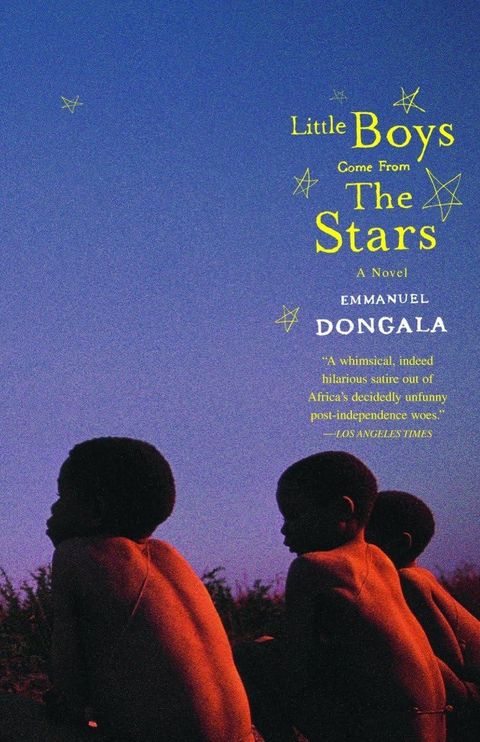
SynopsisPlot
Set in an unnamed country in equatorial Africa, it tells the story of Michel, a precocious teen dubbed Matapari (“trouble”) because of his extraordinary birth. Though his father is a reclusive scholar, his mother a pious though confused Catholic, and his uncle a shameless opportunist determined to gain power in the shifting politics of their post-colonial nation, Matapari remains an unsullied child who wears Reeboks, drinks Coke, reads Japanese comics, and watches Rambo. But when his family becomes the nucleus of the revolution for democracy, Matapari proves to be the ideal narrator for this story of violent upheaval and bloody corruption–a voice whose ironic innocence makes bearable and even humorous the awful realities of the world it describes.
Story
About this book
Little Boys Come from the Stars unfolds in an unnamed country in equatorial Africa, where a boy named Michel is known as Matapari, a nickname meaning trouble that followed his unusual birth. His everyday tastes are global: Reebok shoes, bottles of Coke, comics from Japan, and American action films. Around him, adults handle the unsteady politics of a post-colonial state where rulers rebrand themselves as democrats.
The household pulls in several directions. Matapari's father is a scholarly recluse who spends his energy arguing for African contributions to the Western past. His mother practices a devout but muddled Catholicism. His uncle chases a senior place in whatever government holds power. When the family lands at the centre of a movement for democracy, the country's tensions turn violent.
Emmanuel Dongala gives the telling to Matapari himself, and the boy's voice sets the tone. He grows up among talking drums, the Internet and satellite television, and he reports corruption and upheaval with an ironic innocence that keeps the satire close to comedy. The gap between his plain observations and the adult manoeuvring around him shapes the whole book.