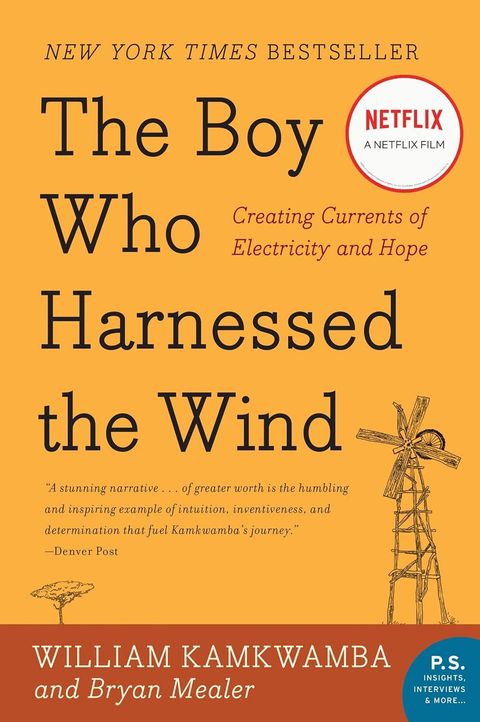
The Boy Who Harnessed the Wind
SynopsisPlot
William Kamkwamba was born in Malawi, a country where magic ruled and modern science was mystery. It was also a land withered by drought and hunger. But William had read about windmills, and he dreamed of building one that would bring to his small village a set of luxuries that only 2 percent of Malawians could enjoy: electricity and running water. His neighbors called him misala—crazy—but William refused to let go of his dreams. With a small pile of once-forgotten science textbooks; some scrap metal, tractor parts, and bicycle halves; and an armory of curiosity and determination, he embarked on a daring plan to forge an unlikely contraption and small miracle that would change the lives around him.
Story
About this book
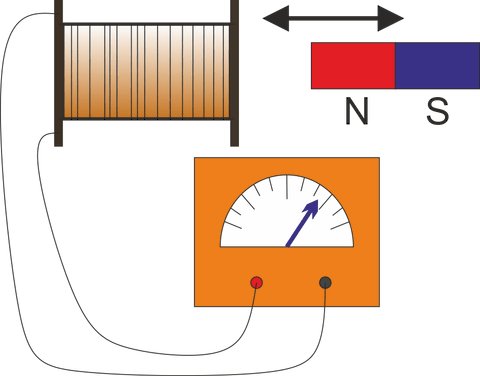
William Kamkwamba grew up in a farming family in Wimbe, a small village in central Malawi. When he was fourteen, a severe famine struck the region, and his family could no longer afford his school fees. Cut off from formal education, he began visiting a local library, where he found textbooks on physics and energy. One book included diagrams of windmills and electrical generators. From those pages, he started to form an idea: he could build a machine that would generate electricity from wind.
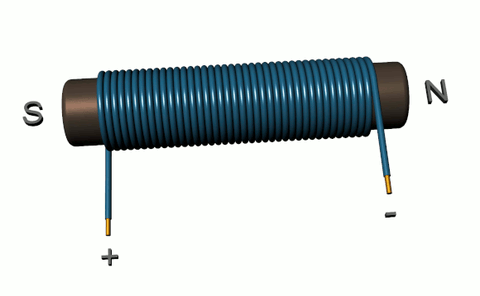
Kamkwamba gathered scrap materials, including a broken bicycle, a tractor fan blade, PVC pipe, and the motor from a small cassette player. His early experiments showed that spinning a motor could produce enough current to power a radio. Neighbors doubted him, but he continued assembling a full-sized windmill near his family's home. In time, his device produced enough electricity for lights and, later, for pumping water to irrigate crops outside the single rainy season.
The book, co-written with journalist Bryan Mealer, is told in first person. It covers not only the engineering work but also the famine itself, the local effects of government mismanagement, and daily life in a country where at the time only about two percent of the population had access to electricity.