Crevasse
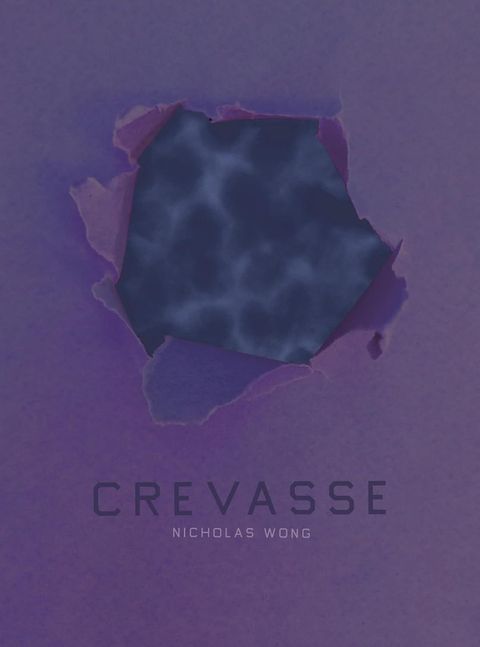
SynopsisPlot
The poems in Crevasse seek to uncover the thread connecting these mutually observed and observing bodies. Like Samuel Beckett and others before him, Wong has deliberately chosen to write in a non-native language―English, his second language after Cantonese. Freed from the assumptions and conventions of his mother tongue, Wong strips down, interrogates and ultimately reorients the fragmented complexities of the multiple communities he inhabits―queer, Asian, poet, reader, lover―in a collection of poems that exposes the gap between familiarity and the inevitable distance of the body.
Story
About this book
Crevasse gathers poems by Nicholas Wong, a poet and teacher based in Hong Kong. An epigraph from the French philosopher Maurice Merleau-Ponty sets the terms: a person cannot fully see his own body, so a second body, itself unseen, becomes necessary as a vantage point. The poems that follow search for the seam where watching and being watched meet.
English is Wong's second language, learned after Cantonese, and he writes in it by choice, much as Samuel Beckett chose to write in French. Working outside a first language lets him unsettle familiar habits of sound and sense, assembling meaning one deliberate word at a time. The body stays present across these pages, through illness, redirected desire, and the marks left by colonization.
The collection moves among the overlapping groups Wong belongs to as a queer Asian writer from Hong Kong, and also as reader and lover. Some poems are lyric, others experimental in form. Crevasse won the 2016 Lambda Literary Award. Wong was a finalist twice, once for the New Letters Poetry Award and once for the Wabash Prize in poetry, and he earned an MFA at City University of Hong Kong.