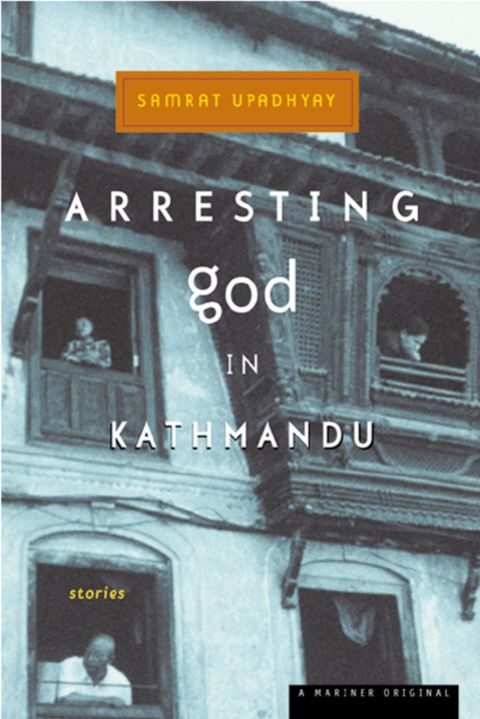
Arresting God In Kathmandu
SynopsisPlot
With the assurance and unsentimental wisdom of a long-established writer, Upadhyay records the echoes of modernization through love and family. Here are husbands and wives bound together by arranged marriages but sometimes driven elsewhere by an intense desire for connection and transcendence. In a city where gods are omnipresent, where privacy is elusive and family defines identity, these men and women find themselves at the mercy of their desires but at the will of their society. Psychologically rich and astonishingly acute, Arresting God in Kathmandu introduces a potent new voice in contemporary fiction.
Story
About this book
Arresting God in Kathmandu is a collection of short stories by Samrat Upadhyay, set in the capital of Nepal. Upadhyay is described as the first writer from Nepal to work in English and reach publication in the West. His characters are ordinary residents of the city, living through a period when modernization presses against long-established structures of family and marriage.
The characters in these stories are husbands, wives, and relatives navigating the gap between personal desire and communal obligation. Kathmandu is depicted as a place where religious life is visible everywhere and where private space is hard to come by. Family ties shape individual identity in ways that can feel both protective and confining. Longing for connection sits against expectations set by tradition.
Upadhyay writes about these conflicts with a close, unsentimental eye. The stories stay grounded in domestic life, in households and neighborhoods, rather than reaching for broad national statements. Marriages arranged by families appear alongside attachments formed outside them. Spiritual questions surface naturally within everyday situations, reflecting a city where temples and shrines occupy the same streets as newer commercial activity.