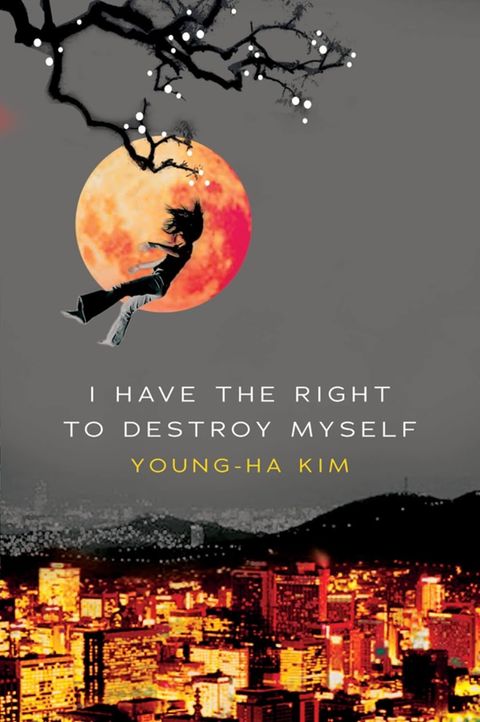
I Have The Right To Destroy Myself
SynopsisPlot
In the fast-paced, high-urban landscape of Seoul, C and K are brothers who have fallen in love with the same woman—Se-yeon—who tears at both of them as they all try desperately to find real connection in an atomized world. A spectral, nameless narrator haunts the edges of their lives as he tells of his work helping the lost and hurting find escape through suicide. Dreamlike and beautiful, the South Korea brought forth in this novel is cinematic in its urgency and its reflection of contemporary life everywhere—far beyond the boundaries of the Korean peninsula.
Story
About this book
Young-ha Kim's novel is set in Seoul, where two brothers, C and K, are each drawn to the same woman, Se-yeon. Their entanglement unfolds against a city defined by speed, density, and emotional distance. The story follows these three characters as they search for genuine closeness in surroundings that seem designed to prevent it.
Threading through their lives is an unnamed narrator whose occupation is unusual and disturbing: he seeks out people in deep distress and helps them end their own lives. His presence gives the novel a strange, hovering quality, as if the story is being observed from just outside the frame. The narrator's sections sit alongside the brothers' storyline, and the two threads gradually pull toward each other.
The book was originally published in South Korea in 1996 and later translated into English. Its structure blends short, linked episodes rather than following a single conventional plot. Kim writes Seoul as both a specific place and a kind of modern condition, where isolation persists even in close quarters. The prose is spare and quick, shaped more by cinematic pacing than by traditional literary storytelling.