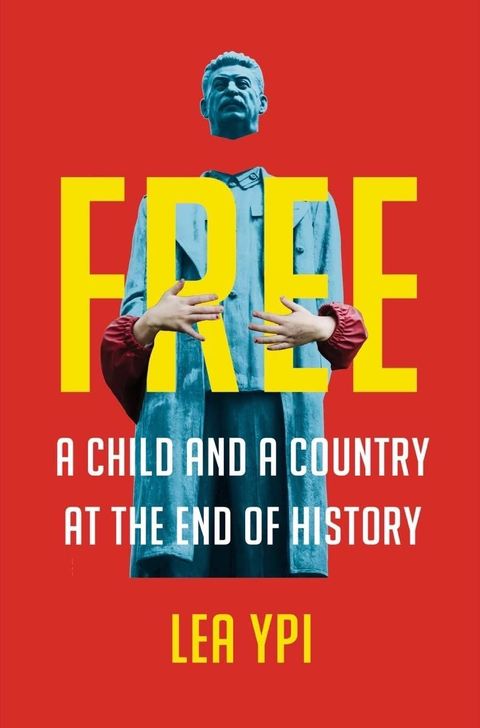
Free: A Child and a Country at the End of History
SynopsisPlot
Family and nation formed a reliable bedrock of security for precocious 11-year-old Lea Ypi. She was a Young Pioneer, helping to lead her country toward the future of perfect freedom promised by the leaders of her country, the People’s Socialist Republic of Albania. Then, almost overnight, the Berlin Wall fell and the pillars of her society toppled. The local statue of Stalin, whom she had believed to be a kindly leader who loved children, was beheaded by student protestors. Uncomfortable truths about her family’s background emerged. Lea learned that when her parents and neighbors had spoken in whispers of friends going to “university” or relatives “dropping out,” they meant something much more sinister. As she learned the truth about her family’s past, her best friend fled the country. Together with neighboring post-Communist states, Albania began a messy transition to join the “free markets” of the Western world: a dystopia of pyramid schemes, organized crime, and sex trafficking. Her father, despite his radical left-wing convictions, was forced to fire workers; her mother became a conservative politician on the model of Margaret Thatcher. Lea’s typical teen concerns about relationships and the future were shot through with the existential: the nation was engulfed in civil war.
Story
About this book
Lea Ypi was eleven years old and a Young Pioneer in the People's Socialist Republic of Albania when the Berlin Wall fell in 1989. Until then her world felt stable: she believed the country's promises of collective freedom, trusted that Stalin was a kindly leader who cared about children, and saw her family as ordinary. The certainties of her childhood broke apart along with statues in public squares.
As the old system crumbled, Ypi learned that her family carried a hidden past. Words her parents and neighbours had used quietly, such as a relative going to university, turned out to be code for detention and persecution. Her best friend left the country. Her father, a committed leftist, had to dismiss workers, while her mother entered politics as a conservative. Albania's transition brought pyramid schemes, organized crime, and instability rather than prosperity.
Free follows these overlapping shifts through the eyes of a child becoming a teenager during economic disorder and civil war. Ypi places ordinary questions about friendship and the future beside the larger passage from state socialism to an unsteady market economy, asking what freedom meant under each system and who defined it.