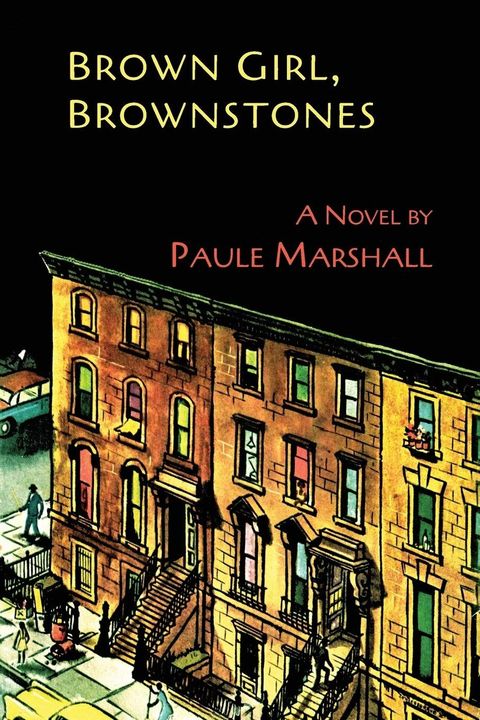
Brown Girl, Brownstones
SynopsisPlot
Brown Girl, Brownstones is about Barbadian immigrants in Brooklyn, New York. The book gained widespread recognition after it was reprinted in 1981. The somewhat autobiographical story describes the life of Barbadian immigrants in Brooklyn during the Great Depression and then in World War II. The primary characters include Selina and Ina Boyce and their parents, who suffer from racism and extreme poverty. The book focuses most directly on the growth and development of the character Selina. Paule Marshall's novel was among the first to portray the inner life of a young female African-American, as well as depicting the cross-cultural conflict between West Indians and American blacks. It remains a vibrant, compelling tale of self-discovery.
Story
About this book
Paule Marshall's first novel, published in 1959, follows a Barbadian immigrant family living in Brooklyn, New York, during the Great Depression and the years of World War II. At its center is Selina Boyce, a young girl caught between her parents' opposing visions of the future. Her mother is determined to stay in Brooklyn and save enough to buy one of the neighborhood's brownstone row houses. Her father longs to return to Barbados. Selina must find her own direction while contending with poverty and racial discrimination.
The story draws on Marshall's own background in a close-knit Barbadian community in Brooklyn. It portrays tensions between West Indian immigrants and African Americans, and the pressures that arise when cultural identity is shaped by two different worlds at once. Selina and her sister Ina each respond differently to the strains placed on their family, and the novel traces Selina's gradual effort to define herself apart from the expectations surrounding her.
The book received limited attention on its initial release but gained wider recognition after being reprinted in 1981. It is considered one of the earliest American novels to center the interior life of a young Black woman from an immigrant Caribbean household.