Their Eyes Were Watching God
SynopsisPlot
Out of print for almost thirty years—due largely to initial audiences’ rejection of its strong black female protagonist—Hurston’s classic has since its 1978 reissue become perhaps the most widely read and highly acclaimed novel in the canon of African-American literature.
Story
About this book
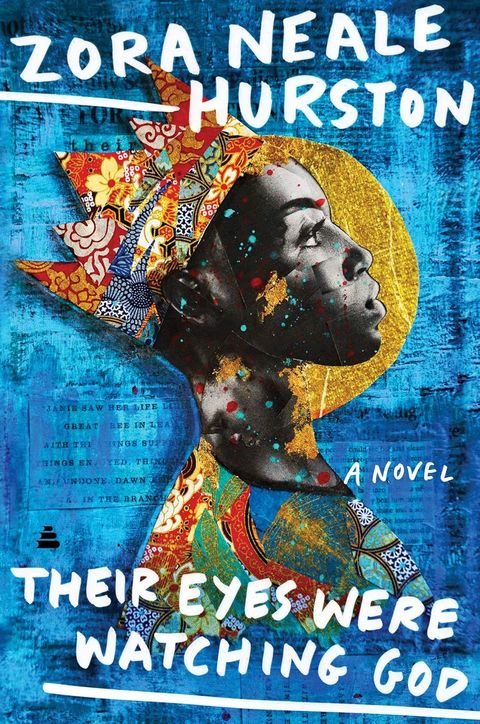
Their Eyes Were Watching God, published in 1937, is a novel by Zora Neale Hurston set in the rural Black communities of Florida. It is told through Janie Crawford, who returns to her hometown and recounts her life to a friend. Janie moves from a naive teenager through three marriages, each shaping her sense of independence and selfhood. Hurston wrote much of the dialogue in the vernacular speech of the rural South.
Janie's path carries her from a small settlement to the muck farms of the Everglades, where migrant workers harvest beans and sugarcane. A hurricane on Lake Okeechobee becomes a turning point. Throughout, the novel examines what it means for a Black woman in the early twentieth-century South to seek a life defined on her own terms rather than by the expectations of others.
The book met a mixed response when it first appeared and went out of print for decades. After a 1978 reissue, it found a wide readership and became one of the most studied novels in African-American literature. Hurston was also a folklorist and anthropologist who studied at Barnard College under Franz Boas.