The Watermelon Boys
SynopsisPlot
It is the winter of 1915 and Iraq has been engulfed by the First World War. Hungry for independence from Ottoman rule, Ahmad leaves his peaceful family life on the banks of the Tigris to join the British-led revolt. Thousands of miles away, Welsh teenager Carwyn reluctantly enlists and is sent, via Gallipoli and Egypt, to the Mesopotamia campaign. Carwyn’s and Ahmad’s paths cross, and their fates are bound together. Both are forever changed, not only by their experience of war, but also by the parallel discrimination and betrayal they face.
Story
About this book
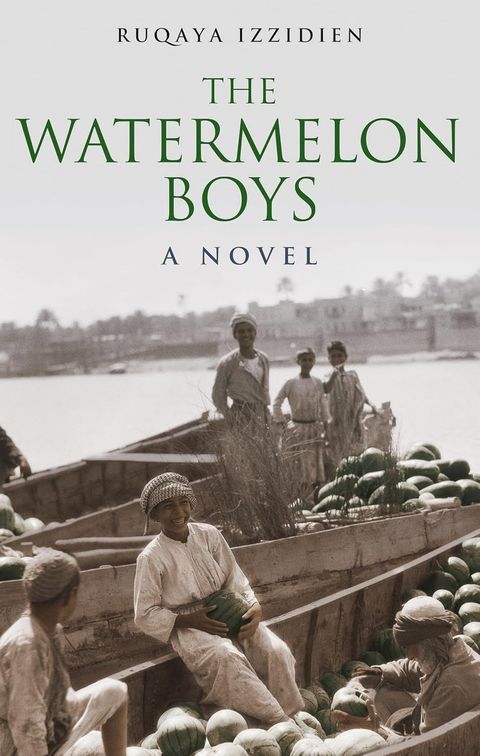
In the winter of 1915, the Ottoman Empire still controls Iraq, and the First World War has reached the banks of the Tigris. Ahmad, a young Iraqi man seeking independence from Ottoman rule, leaves his family to join the British-backed revolt. Far away in Wales, a teenager named Carwyn enlists reluctantly and is shipped through Gallipoli and Egypt before arriving in Mesopotamia. Ruqaya Izzidien's novel follows these two lives as they move toward the same conflict from opposite directions.
When Ahmad and Carwyn eventually cross paths, the story draws their fates together. Both face the violence of the campaign, but the novel also traces the forms of discrimination and betrayal each encounters along the way. Ahmad contends with the political reality of exchanging one occupying power for another, while Carwyn deals with the pressures that drove him into a war he did not choose. The parallel structure allows the book to observe how promises of liberation and duty look different depending on where a person stands.
The setting spans several locations across the Middle East and beyond, from the Tigris river valley to Gallipoli and Egypt. Izzidien uses this geography to frame a part of the First World War that receives less attention in English-language fiction than the Western Front.