The Path Between the Seas
SynopsisPlot
The Path Between the Seas tells the story of the men and women who fought against all odds to fulfill the 400-year-old dream of constructing an aquatic passageway between the Atlantic and Pacific oceans. It is a story of astonishing engineering feats, tremendous medical accomplishments, political power plays, heroic successes, and tragic failures. Applying his remarkable gift for writing lucid, lively exposition, McCullough weaves the many strands of the momentous event into a comprehensive and captivating tale.
Story
About this book
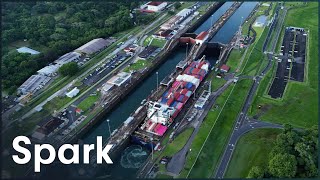
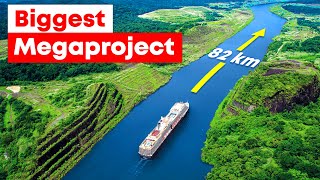
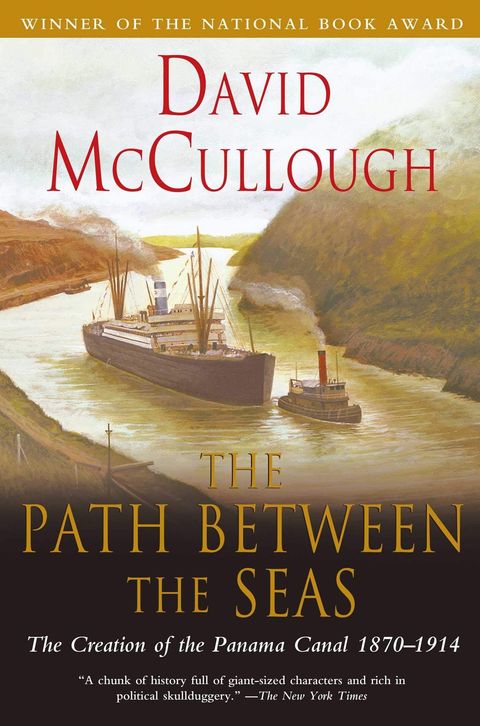
David McCullough's The Path Between the Seas traces the decades-long effort to build a waterway across the Isthmus of Panama, connecting the Atlantic and Pacific oceans. The project began under French leadership in the 1880s, when Ferdinand de Lesseps, fresh from his success at Suez, attempted to cut through the jungle and rock of Central America. That effort collapsed amid disease, financial scandal, and staggering loss of life. The United States later took over the enterprise, and the canal opened in 1914, just before the outbreak of World War I.
McCullough draws on sources gathered in Paris, Bogota, Panama, the Canal Zone, and Washington, including interviews with participants and their families. The book follows a large cast: de Lesseps and his son Charles, the diplomat Philippe Bunau-Varilla, army engineer George Washington Goethals, medical officer William Gorgas, the civilian engineer John Stevens, and Theodore Roosevelt, whose 1903 intervention shaped both the canal and the new nation of Panama.
Alongside the engineering and political dimensions, the account covers the campaign against yellow fever and malaria, which had devastated earlier workers. McCullough treats the canal as a convergence of medicine, diplomacy, labor, and geography rather than a single narrative of construction.