Space Encyclopedia: A Tour of Our Solar System and Beyond
SynopsisPlot
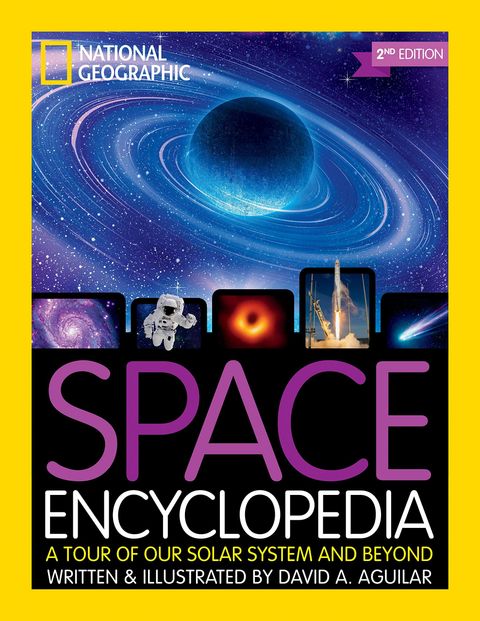
The updated and expanded edition of the hit Space Encyclopedia presents the most up-to-date findings on space exploration and research and breathtaking views of the universe, as captured by the latest and greatest technology, including the recent first ever image of a black hole. This complete reference contains everything kids need to know about our sun and planets including the new dwarf planets, the formation of the universe, space travel, the possibility of life beyond Earth, and more. Authored by David A. Aguilar, an internationally recognized astronomer and former Director of Science Information and Public Outreach at the Harvard-Smithsonian Center for Astrophysics, it is an authoritative and beautifully illustrated must-have for every family, providing both accessible information for school reports and compelling reading on the mysteries beyond our planet.
Story
About this book
Space Encyclopedia: A Tour of Our Solar System and Beyond is a reference book for young readers published by National Geographic Kids. Written by David A. Aguilar, a former Director of Science Information and Public Outreach at the Harvard-Smithsonian Center for Astrophysics, the book covers our sun, the planets, dwarf planets, the formation of the universe, space travel, and the question of whether life exists elsewhere. This updated and expanded edition incorporates recent findings in space exploration and research, including the first-ever image of a black hole, captured in 2019 by the Event Horizon Telescope collaboration.
The book pairs its explanations with large-format photographs and illustrations showing views of the universe recorded by current telescope and spacecraft technology. Entries are organized to work as a reference for school projects while still reading as a continuous survey of what is known, and what remains unknown, about space beyond Earth.
Aguilar's background in both astronomy and public science communication shapes the book's approach. Technical concepts such as dwarf planet classification or black hole imaging are presented in language aimed at younger readers, with visual material that gives scale to objects and distances that are otherwise difficult to imagine.