The Queue
SynopsisPlot
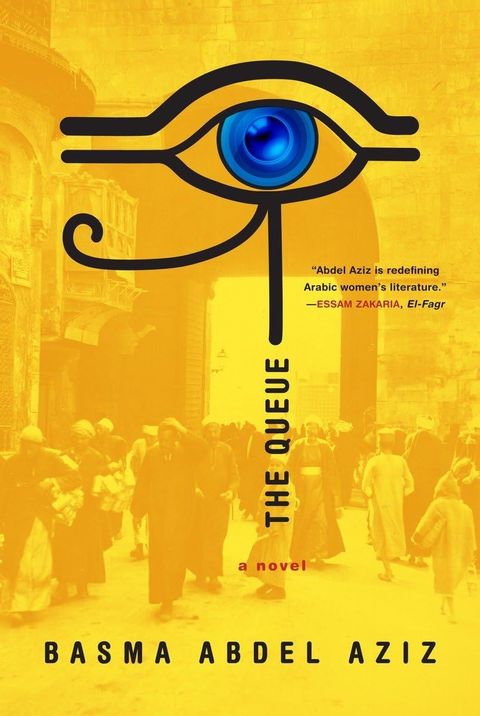
In a surreal, but familiar, vision of modern day Egypt, a centralized authority known as ‘the Gate’ has risen to power in the aftermath of the ‘Disgraceful Events,’ a failed popular uprising. Citizens are required to obtain permission from the Gate in order to take care of even the most basic of their daily affairs, yet the Gate never opens, and the queue in front of it grows longer. Citizens from all walks of life mix and wait in the sun: a revolutionary journalist, a sheikh, a poor woman concerned for her daughter’s health, and even the brother of a security officer killed in clashes with protestors. Among them is Yehia, a man who was shot during the Events and is waiting for permission from the Gate to remove a bullet that remains lodged in his pelvis. Yehia’s health steadily declines, yet at every turn, officials refuse to assist him, actively denying the very existence of the bullet. Ultimately it is Tarek, the principled doctor tending to Yehia’s case, who must decide whether to follow protocol as he has always done, or to disobey the law and risk his career to operate on Yehia and save his life.
Story
About this book
In a fictional version of modern Egypt, a centralized power called the Gate has taken control after a failed popular uprising referred to as the Disgraceful Events. Every citizen now needs the Gate's approval for ordinary tasks, from medical procedures to routine paperwork. But the Gate never opens. Instead, a line of people stretches longer each day, and those waiting begin to form a small, uneasy society of their own. Among them are a journalist, a sheikh, a mother worried about her sick daughter, and the brother of a security officer who died during the unrest.
At the center of the story is Yehia, a man carrying a bullet in his pelvis from the Events. He needs surgery, but no official will grant authorization, and some deny the bullet exists at all. His condition worsens while bureaucracy loops around him. His doctor, Tarek, faces a quiet but serious dilemma: follow the rules he has always respected, or act against them to save a patient's life.
Basma Abdel Aziz, an Egyptian psychiatrist and writer, published this debut novel originally in Arabic. The story uses dark humor and surreal logic to examine how authoritarian systems control information and wear down individual agency, even among those who believe they are loyal to the system.