Midnight's Children
SynopsisPlot
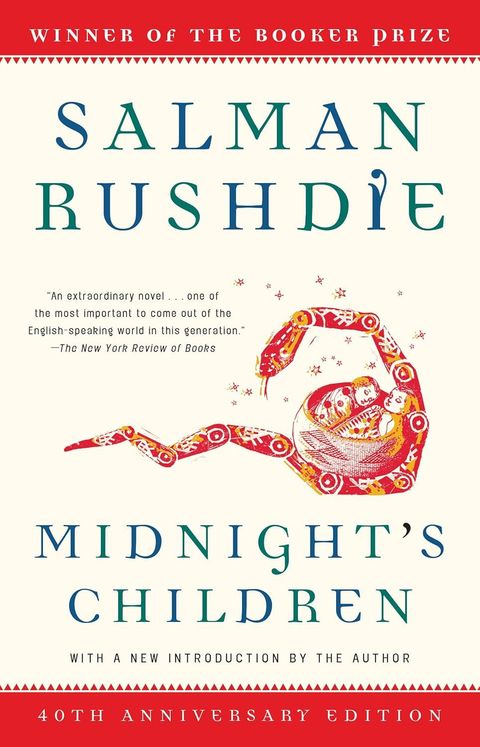
Saleem Sinai is born at the stroke of midnight on August 15, 1947, the very moment of India’s independence. Greeted by fireworks displays, cheering crowds, and Prime Minister Nehru himself, Saleem grows up to learn the ominous consequences of this coincidence. His every act is mirrored and magnified in events that sway the course of national affairs; his health and well-being are inextricably bound to those of his nation; his life is inseparable, at times indistinguishable, from the history of his country. Perhaps most remarkable are the telepathic powers linking him with India’s 1,000 other “midnight’s children,” all born in that initial hour and endowed with magical gifts.
Story
About this book
Saleem Sinai is born at the exact moment India becomes independent, midnight on August 15, 1947. In Salman Rushdie's 1981 novel, his life then runs parallel to the life of the new nation. His health rises and falls with India's fortunes, and his private choices ripple outward into public affairs. He also finds he shares a telepathic link with the other children born in that first hour, each carrying a distinct magical gift.
The book moves across several decades, from the end of British colonial rule and the partition of the subcontinent to the political upheavals that followed. Rushdie makes Saleem both narrator and participant, so documented events reach the page through one personal and often unreliable voice. That mixture of recorded history and invented episode places the novel within magical realist and postcolonial writing, and within postmodern fiction that comments on its own telling.
It took the 1981 Booker Prize and, in the same year, the James Tait Black Memorial Prize. Voters later chose it as the finest Booker winner at the award's 25th and 40th anniversaries, in 1993 and 2008. The BBC's Big Read poll of best-loved novels in the UK listed it in 2003, and Penguin included it among Great Books of the 20th Century.