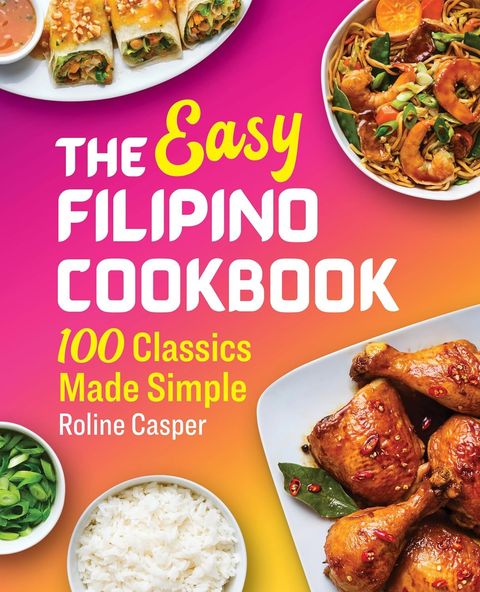
The Easy Filipino Cookbook: 100 Classics Made Simple
SynopsisPlot
Filipino food is a versatile, adaptable cuisine, perfect for cooking and sharing with your loved ones. Each delectable dish is a labor of love―and a proud celebration of Pinoy culture. This Filipino cookbook makes home cooking quick and easy, bringing the flavors of the islands to your own kitchen. The Easy Filipino Cookbook begins with an in-depth history of Filipino food as we know it, as well as culinary influences from around the world. These tasty and traditional Filipino recipes are also simple enough for any home cook and so delicious you'll feel proud to share with everyone. Kain tayo―let's eat! The Easy Filipino Cookbook includes: Regional recipes―This Filipino cookbook gives you a look into flavor profiles for dishes hailing from Luzon, Calabarzon, Bicol, Visayas, and Mindanao. Pinoy prep―Discover essential tools, techniques, and ingredients for popular Filipino dishes, as well as adaptations for an electric pressure cooker or Instant Pot®. Masarap menu―Cook your way through 100 easy-to-make, classic, and favorite Filipino dishes―including some yummy party menu inspiration to complete any celebration.
Story
About this book
Roline Casper's cookbook collects 100 Filipino recipes organized by region, covering dishes from Luzon, Calabarzon, Bicol, Visayas, and Mindanao. The book opens with a section on the history of Filipino food and the culinary influences that have shaped it over centuries, including trade connections and colonial-era exchanges that brought ingredients and techniques from China, Spain, and the United States into Filipino kitchens. Casper also provides guidance on essential tools, techniques, and core ingredients used across popular dishes.
The recipes are written for home cooks who may not have prior experience with Filipino cooking. Each one is designed to be relatively quick to prepare, and the book includes adaptations for electric pressure cookers. Dishes reflect the characteristic balance of sweet, sour, salty, and bitter flavors found across Filipino cuisine. The collection also features suggested party menus, grouping recipes into combinations suited for celebrations and shared meals.
The five regional sections give readers a way to see how geography shapes flavor profiles across the Philippine archipelago. Bicol, for instance, is known for dishes that use coconut milk and chili, while Visayan cooking draws on the seafood resources of the central islands. This regional structure helps distinguish flavors that are often grouped together under a single national label.