Operation Urgent Fury: The Invasion of Grenada, October 1983
SynopsisPlot
The U.S. Army spent much of the decade after its retreat from Vietnam rebuilding itself into a supremely capable, all-volunteer force. With the application of new doctrine, equipment, and, especially, dynamic leadership at all levels, the Army slowly recovered from that traumatic time. Focused primarily on preparations to counter the Soviet and Warsaw Pact threat to central Europe, the U.S. Army trained hard in conventional operations as enshrined in its primary doctrinal manual, Field Manual 100–5, Operations (1976). Within ten years of the end of U.S. involvement in Vietnam, the Army had rebuilt itself but had only begun to integrate into a joint team capable of fighting in a synchronized multiservice operation. World events, however, have a way of forcing a nation to go to war or, at least, to engage in operations “with the Army it has, and not the Army it wants,” to quote a more contemporary statement of how occurrences have a way of surprising policymakers.
Story
About this book
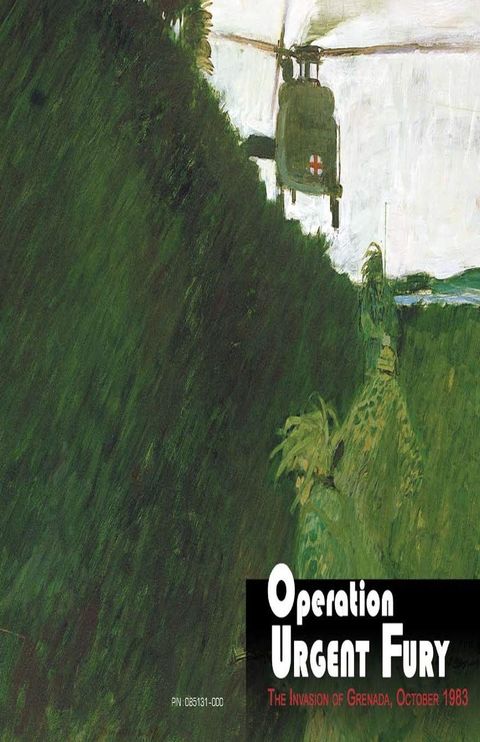
In October 1983, the United States military launched Operation Urgent Fury, a rapid intervention on the Caribbean island of Grenada. The operation followed a period of political instability on the island, including a military coup, and was justified in part by concerns for American medical students studying there. This book by Richard W. Stewart and Edgar F. Raines examines the invasion as a military operation, placing it within the broader context of the U.S. Army's reconstruction after the Vietnam War.
Through the 1970s and early 1980s, the Army had been rebuilding itself into an all-volunteer force oriented toward a possible conflict with the Soviet Union and Warsaw Pact in Europe. New doctrine, equipment, and leadership shaped this transformation, formalized in documents such as Field Manual 100-5, Operations, published in 1976. The Grenada operation tested these changes in an actual combat setting, but it also exposed the early difficulties of coordinating a joint operation across multiple military branches.
Stewart and Raines trace how the planning, execution, and coordination unfolded during the intervention. Their account addresses the gap between the Army the planners wanted and the force that was available when events on Grenada forced a rapid decision. The book treats Urgent Fury as a case study in how real-world crises can outpace institutional readiness.