Mornings in Jenin
SynopsisPlot
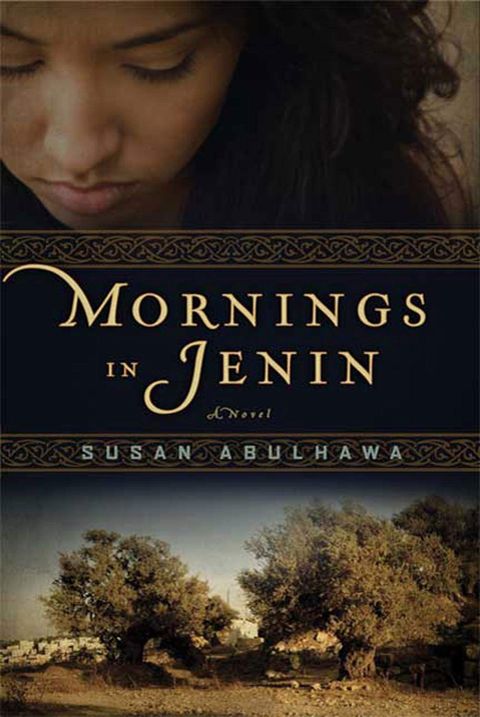
Mornings in Jenin is a multi-generational story about a Palestinian family. Forcibly removed from the olive-farming village of Ein Hod by the newly formed state of Israel in 1948, the Abulhejos are displaced to live in canvas tents in the Jenin refugee camp. We follow the Abulhejo family as they live through a half-century of violent history. Amidst the loss and fear, hatred, and pain, as their tents are replaced by more forebodingly permanent cinderblock huts, there is always the waiting, waiting to return to a lost home. The novel's voice is that of Amal, the granddaughter of the old village patriarch, a bright, sensitive girl who makes it out of the camps, only to return years later, to marry and bear a child. Through her eyes, with her evolving vision, we get the story of her brothers, one who is kidnapped to be raised Jewish, one who will end with bombs strapped to his middle. But of the many interwoven stories, stretching backward and forward in time, none is more important than Amal's own. Her story is one of love and loss, of childhood and marriage and parenthood, and finally the need to share her history with her daughter, to preserve the greatest love she has.
Story
About this book
Mornings in Jenin follows four generations of the Abulheja family, beginning in 1948, when they are forced from the olive-farming village of Ein Hod and moved to the Jenin refugee camp. The patriarch, cut off from the groves he tended, declines there. His grandchildren grow up among canvas tents that are later replaced by cinderblock shelters, a sign that return may be distant.
The narrator is Amal, the patriarch's bright granddaughter, shaped by a father who read to her in the quiet before dawn. Her twin brothers take very different paths: one is taken as a small child and raised in an Israeli Jewish family, while the other gives himself to the Palestinian cause. Amal makes her way out of the camp and returns years later to marry and raise a daughter.
Susan Abulhawa threads the family's private life through five decades of Palestinian and Israeli history, including several major clashes. Friendship, first love, marriage, and parenthood unfold alongside displacement, loss, and waiting. The novel closes in on Amal's wish to pass her family's story to her daughter, so the family's account continues in another generation.